Barcelona Card: 25+ Museums and Free Public Transportation
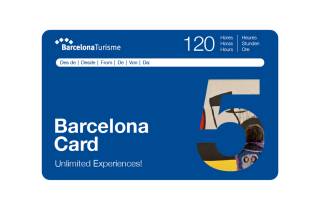
Access over 25 of Barcelona’s best museums and attractions. Save money, be flexible and enjoy free public transportation with a 3, 4, or 5-day card.
From 57,00 €
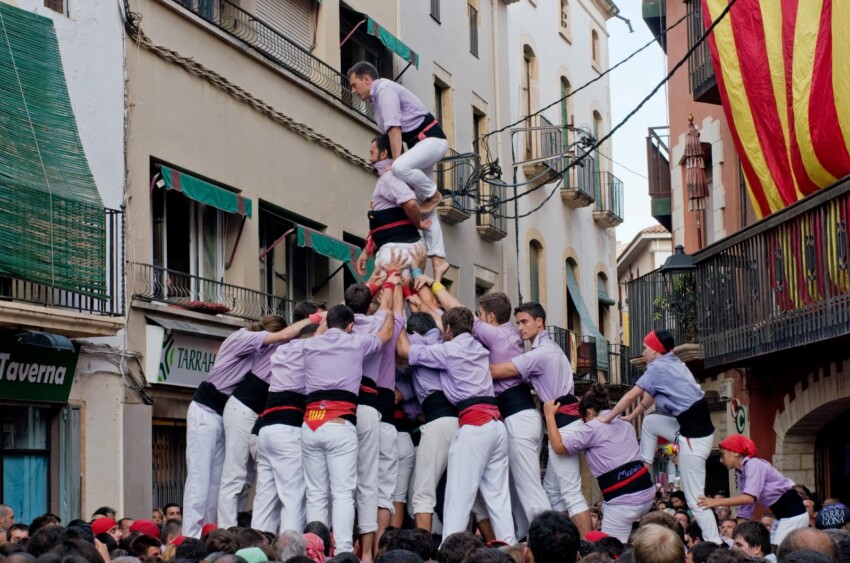
Barcelona is not just about parties and entertainment!
It is a modern, European city where everyday life is marked by past events, the city’s history and the traditions that make it unique in the eyes of the visitor.
You will be spoilt for choice to fully immerse yourself in the fervour and originality of its culture!
The history of the city from its foundation in the 3rd century BC by Hannibal’s father to the present day.
Barcino (Barcelona’s ancient name) was founded, according to legend, in the 3rd century BC by the Carthaginian Hamil Barca, Hannibal‘s father.
Conquered by the Romans in 218 BC, the city was baptised with the name of Colonia Iulia Augusta Faventia Paterna Barcino and organised as a castrum (a fortified military camp), located on Mons Taber, a hill where the town hall and the seat of the Generalitat (Plaça de Sant Jaume) stand today.
In the 5th century, at the beginning of the decline of the Roman Empire, the Visigoths conquered the city, followed by the Moors in the 8th century and the Franks led by Charlemagne in 801. These made it the capital of the county of Barcelona, later sacked by Al-Mansur in 985.
From the 10th century onwards, a long period of prosperity began for Barcelona due to its primacy in Mediterranean trade. Splendid Gothic buildings were erected and, between the 13th and 14th centuries, the medieval heart of the city was protected by new city walls.
With the rise of neighbouring Castile, however, trade routes soon shifted and, from the 15th century onwards, Barcelona entered a period of decadence that lasted for a long time.
In opposition to the severe repressive policies implemented by Madrid, some local factions, known as Els Segadors (the reapers), rebelled. The struggle began in 1640 and lasted until 1652, when the Catalans and their French allies were defeated.
Catalan opposition to Castilian hegemony often provoked revolts that reached their peak during the War of Succession (1702-1713), when Catalonia mistakenly sided with the United Kingdom and Austria against Philip V, the French contender to the Spanish throne. The result was the banning of the Catalan language and the construction of a huge fort, La Ciutadella, to keep the infidel subjects under control.
Only towards the end of the 18th century did the situation slowly begin to improve.
> The boom in industry and trade with America, which only began in the late 18th century, reinvigorated the city. The Spanish industrial revolution, initially based on cotton, began in Barcelona and was soon followed by the development of the wine, cork and iron industries.
In the 1840s and 1940s, Romanticism revived interest in Catalan culture and language, which were on the verge of disappearing.
The new prosperity, represented by the Universal Expositions of 1888 and 1929, triggered the Catalan Renaixança (Renaissance), a kind of crusade led by local poets and writers to spread the language of their people.
At about the same time, a strong nationalist movement was born.
At the beginning of the 20th century, Barcelona experienced a demographic boom: the population rose from 115,000 in 1800 to over 500,000 in 1900, and to over a million in 1930
Among workers, nationalists, communists, Spanish fascists, royalists, anarchists and republicans there was widespread discontent. In 1909, protests against the war in Morocco resulted in the Semana Tràgica (tragic week).
In 1931, at the rise of the Second Spanish Republic, Catalan nationalists proclaimed a republic within an ‘Iberian Federation‘: Catalonia quickly gained full autonomy after the victory of the leftist party, the Popular Front, in the February 1936 parliamentary elections. For about a year, revolutionary anarchists and the POUM (the Party of Unification of Marxist Workers) ruled the city.
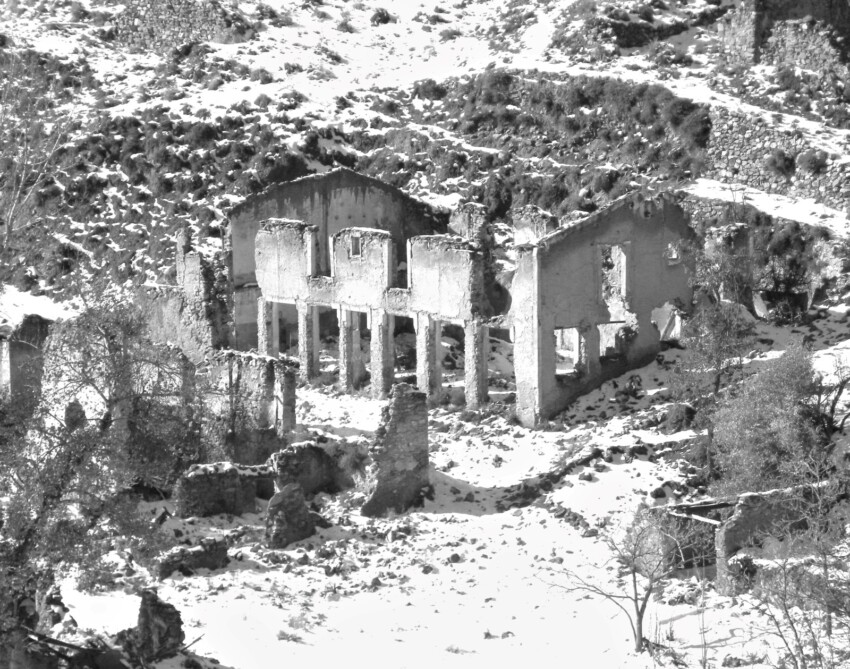
When the civil war broke out in 1936, the workers and militants of Barcelona managed for a while to contain the golpist army. The city, the last stronghold of the republicans, was taken by Franco‘s troops in January 1939 and the war ended a few months later. A harsh repression began, including the abolition of the Catalan language and the popular dance called sardana, and, instead of submitting to Franco, thousands of Catalans fled the country via the French and Andorran borders.
Franco’s death in 1975 revived the Catalan independence movement: the Catalan language was rehabilitated and the Generalitat was founded, a kind of local parliament, around which people still gather several times a week to dance the sardana.
With the entry into force of the new Spanish Constitution, Catalonia was granted regional autonomy. The first Catalan government was elected in 1980.
Barcelona rose to international prominence in 1992 with the Olympic Games, during which the city upgraded its infrastructure, metro, port areas, railway network and airport, giving an extraordinary boost to the increasingly important tourism.
Today, Barcelona has a socialist political orientation and calls itself both Spanish and Catalan.
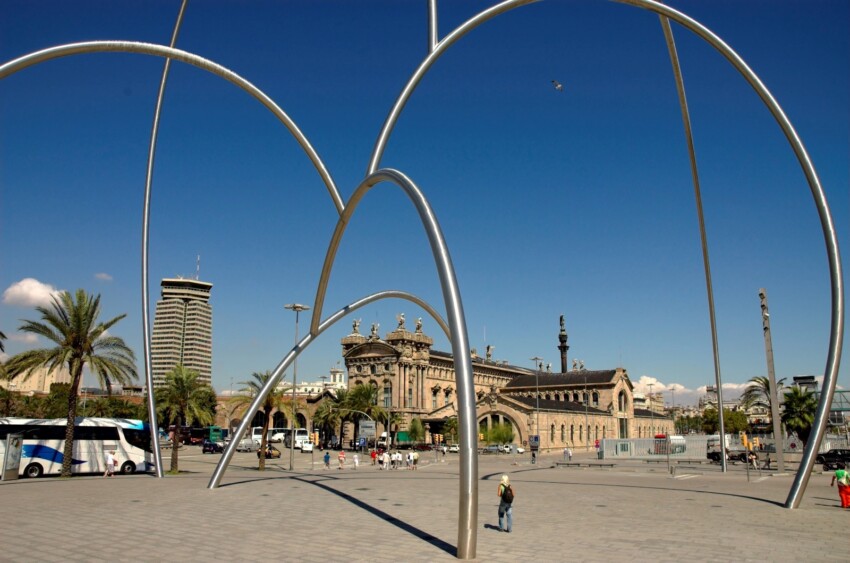
On 23 February 1981, Antonio Tejero, a colonel of the Guardia Civil, went shooting into the Spanish parliament, determined to put an end to the recently re-established democracy in order to impose an extreme right-wing regime. His coup attempt failed, but from it sprang a paralysing fatalism, a feeling of distrust towards the young democracy, which was difficult to win, especially in Catalonia.
Narcis Serra, the mayor of Barcelona at the time, had the right idea at the right time: to propose Barcelona, the capital of Catalonia, as the venue for the 1992 Olympic Games, so as to build a symbol of prestige for the city, one that would catalyse the interests of the population. Serra may not have imagined until then the overwhelming enthusiasm with which his proposal would be accepted, but there certainly could not have been a better antidote to the coup d’état.
Three times already in the past the city had tried to host the Olympics and always other cities had prevailed: in 1920 Paris, in 1936 Berlin and in 1972 Munich. A fourth defeat was not allowed! And the International Olympic Committee understood the situation. This decision in favour of Barcelona triggered an explosion of boundless joy that involved all social classes and gave a boost of optimism to a large number of economic initiatives.
The Olympic Games were seen as a stimulus for the development of many other activities in the long term and not as the ultimate goal: the renovated Olympic stadium in Montjuic and the ultra-modern Sant Jordi Sports Hall were certainly an achievement for the citizens, but even more so were the improvement of the infrastructure, the development of the road network, the expansion of the airport, the modernisation of telecommunications and the renovation of the old Poble Nou district.
The XXVth Olympic Games, therefore, took place in Barcelona from 25 July to 9 August 1992. These can be described as the Games of splits, with new independent states (Estonia, Lithuania, Latvia) and the participation of a single team in the competitions for the two now reunited Germanys, as well as the readmission of South Africa.

Catalan is a Romance Neo-Latin language with also Gallo-Romance influences spoken in Catalonia, the region of Valencia, the Balearic Islands (Spain), the Republic of Andorra, French Roussillon and the Sardinian city of Alghero (Autonomous Region of Sardinia – Italy).
In the Valencian country, the language is called valencià (Valencian), while in the Balearic Islands it is commonly called mallorquin (Majorcan). Barcelonian, Valencian and Majorcan only differ considerably on a phonetic level.
In the Catalan-speaking cities of Spain, the study of Catalan has been greatly encouraged for at least thirty years, giving it increasing strength and power, and today the linguistic domain of the Catalan language extends over 68,000 km 2 , in which 11,380,000 inhabitants live.
Catalan was formed at the turn of the Pyrenees between the 8th and 10th centuries, in the territories of theCarolingian Empire that represented the counties of the Hispanic Marches. During the 12th and 13th centuries it extended southwards and eastwards, thanks to the territorial conquests of the kingdom of Aragon and Catalonia, and the linguistic border was established at the end of the reign of James I.
The literary production in Catalan was long and flourishing: the earliest written records of Catalan, to the best of our present knowledge, are fragments of the Catalan version of the Forum Iudicum and a book of homilies from the church of Organyà (Homilies d’Organyà), both from the 12th century. Catalan had a remarkable expansion as a language of creation and government (Cancelleria Reial) between the 13th and 16th centuries, when the kingdom of Aragon and Catalonia extended its dominions in the Mediterranean, reaching Sicily, Sardinia, Naples and even Athens.
Among the literary works of universal importance from this period are certainly those of Ramon Llull, a contemporary of Dante, who created literary and philosophical prose in the vernacular, thus ranking among the major writers of the medieval period. We should also add the works of Francesc Eiximenis, Anselm Turmeda, Bernat Medico, Ausiàs Marc, or Tirant the White, considered the first modern novel in Western literature. Also in Catalan are the great collections of laws from this era, such as the Furs de València, the Costums de Tortosa, the Usatges or the Book of the Consulate of the Sea, a maritime trade code that was applied throughout the Mediterranean until the 18th century.
Although it had rapid access to the printing press (as demonstrated by the appearance, as early as 1474, of the first book printed in Catalan: Les trobes en llaors de la Verge Maria), during the Renaissance and Baroque, the Catalan language went through a phase of decadence in relation to cultured literature. Initially maintained only for legislative and administrative use, and as the only vernacular language, it soon lost even this function in favour of the increasingly flourishing Castilian.
Coinciding with the Romanticism and nationalism movements that were springing up all over Europe, the Catalan language experienced a rich literary renaissance (Renaixença), the beginning of which is usually identified with the publication of the ode La Pàtria (1833) by Bonaventura Carles Aribau, and which continued with the poetic, theatrical and narrative production of many authors from Catalonia, the Balearic Islands and the Valencian lands.
At the same time, language studies were initiated and dictionaries, treatises on barbarisms and orthography were drawn up, anticipating the modern normalisation initiated in the early 20th century by Pompeu Fabra.
With the republican constitution of 1931 and the statute of autonomy of 1932, Catalonia was able to recover its own institution of government (the Generalitat), Catalan was declared an official language and there was an active policy of support for the teaching of the idiom. In the Balearic Islands and the Valencian lands, however, the statutes of autonomy were not approved.
Between 1939 and 1975, during the dictatorship established at the end of the civil war, the persecution of Catalan was intense and systematic, especially until 1962. The regime prohibited the publication of books, newspapers and magazines, the transmission of telegrams and telephone conversations in Catalan; Castilian was the language used in the dubbing of films, theatrical performances and radio and television broadcasts; administrative, notarial, judicial or commercial documents were always in Castilian and those drafted in Catalan were considered null and void by law; road and commercial signs, advertising and, in general, the country’s entire external image were in Castilian. This did not prohibit the preservation of the Catalan language as a familiar idiom of communication, both in Catalonia and in the other Catalan-speaking territories.
With the recovery of democratic freedoms, the 1978 Constitution recognised linguistic plurality and stipulated that Spanish languages other than Castilian could be official, according to the statutes of autonomy. The statutes of Catalonia (1979) and the Balearic Islands (1983) recognised Catalan as the language of these territories and declared it an official language along with Castilian; the same decision was also taken, under the legal name of Valencian, by the Valencian Community (1982). At the same time, the Constitution of Andorra (1993) states that Catalan is the official language of the State.
Since 2005, theEuropean Union has recognised Catalan as a minority or regional language, giving it co-officiality alongside Castilian.
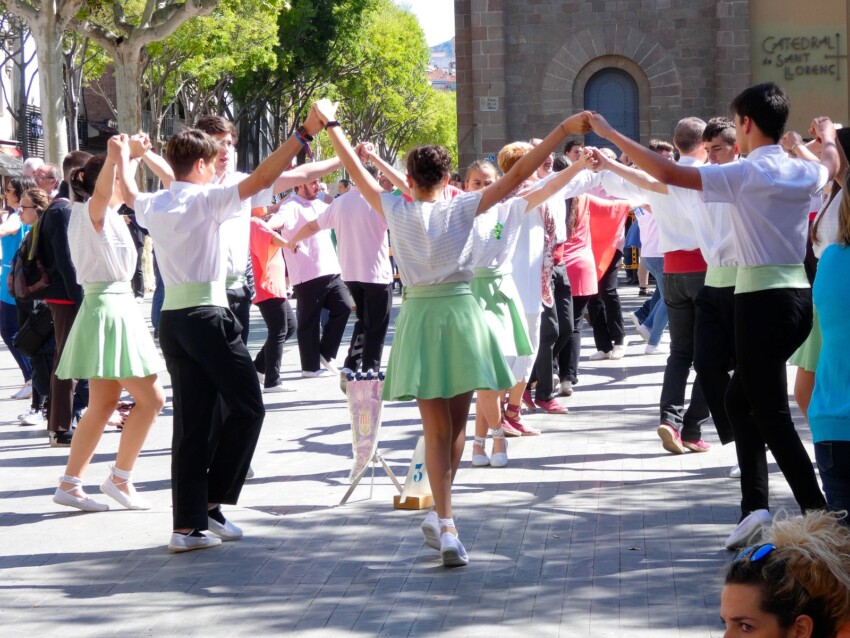
There is probably nothing more characteristic in Catalonia than the Sardana, a collective traditional dance with probable Greek origins.
The Catalan poet Joan Maragall describes it as a ‘magnificent ring that moves’ and the image certainly conveys the idea of this dance, which is performed by holding hands in a circular movement, accompanied by the sound of the cobla, a brass and wind band.
Usually the Sardana is danced in normal clothes, although there is a traditional costume consisting of a white dress with a black belt tied around the waist and espadrilles on the feet.
Don’t be surprised if you find yourself catapulted into the circle to perform the steps together with the dancers: it is sure to be exciting to feel the enthralling spirit of this lively dance!
City Card allow you to save on public transport and / or on the entrances to the main tourist attractions.
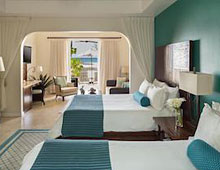 Hotel
Hotel  Budget accommodations
  Apartments
  Family Hotel
 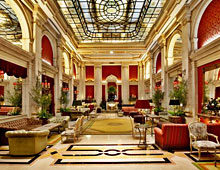 Luxury Hotel
  Resorts