Barcelona: Sagrada Familia Entry Ticket with Audio Guide
109.122 reviews
Buy now
From 33,80€ per person
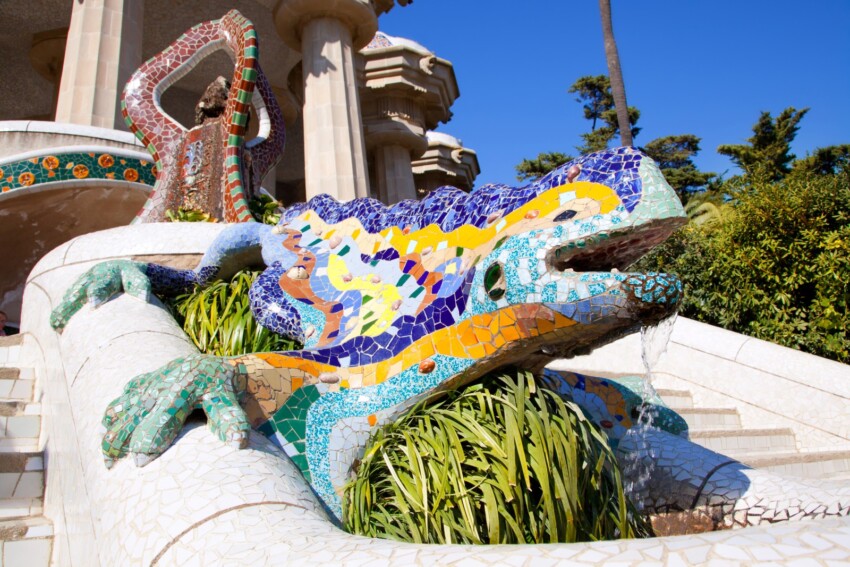
With his total dedication to architecture inspired by nature, Antoni Gaudí (1852-1926) revolutionised architecture in Catalonia at the beginning of the 20th century. As Art Nouveau spread across Europe, its Catalan version, Modernism, reached its most extreme forms and Gaudí was its most brilliant and controversial representative.
Originally from Reus, near Tarragona, he showed an early interest in the natural forms of fauna and flora, geology and anatomy. This, combined with a taste for craftsmanship techniques, inherited from his boilermaker father, became the common thread running through his works. For Gaudí, structure was inseparable from form, colour and texture, a ‘holistic’ approach inspired by the English Arts and Crafts movement. He turned these ideas into reality thanks to the foresight of a patron and his own experience in architecture.
Gaudi’s early designs, executed around 1880, showed the influence of the Gothic and Mudejar styles, with ornamental bricks, ceramics, parabolic arches, turrets and domes. By 1900, he had expressed his inimitable curvilinear style in the ambitious Parc Guell project in Barcelona, financed by the industrialist Eusebi Guell, who became his loyal supporter.
Sinuous natural forms and the use of irregularly sized ceramic fragments became the unmistakable hallmark of Gaudí’s complex and playful style; other examples in Barcelona are Casa Batllò, nicknamed ‘the house of the emaciated shin’ and Casa Milà (La Pedrera), in which chimney pots and roof ladders become surrealistic colourful sculptures. This realm of fantasy is still a meeting place for Barcelona’s young artists.
The construction approach was rather orthodox: Gaudí never prepared working drawings, but relied on sketches, perspectives and models. This irrationality certainly anticipated Surrealism but created insurmountable difficulties in the posthumous completion of Gaudí’s last project, the Sagrada Familia in Barcelona. The architect, who spent the last years of his life practically a recluse, wanted this neo-Gothic structure to synthesise his deep spirituality, developing mystical theories on the symbolism of structures.
His commitment to the Sagrada Familia became an obsession to the point that when the funds for its construction ran out, he sold his property and borrowed from friends. The life of this eccentric genius ended tragically, but in a suitably unconventional way: when he was run over by a tram, Gaudi’s appearance was that of a tramp and no one recognised him. Since then his fame has grown and the incomplete Sagrada Familia has become the very symbol of Barcelona.
Gaudi’s most famous works include:
Perhaps not everyone knows that a committee of 30 churchmen, academics, designers and architects have recently taken the initiative to propose Gaudí for beatification and canonisation. With the support of the entire Catalan Catholic Church, the Catalan genius is a candidate for the title ‘Architect of God’. The archbishop of Barcelona, Cardinal Ricard Maria Carles, a sympathiser of Catalan nationalism, is quite happy to use all his political weight within the Holy See to support the movement for Saint Antoni, a ‘lay mystic’ as he called him.
There is, of course, no shortage of opposition to the initiative, from the long tradition of anticlericalism of Catalan left-wing intellectuals, who accuse the Church of attempting to make its own a revolutionary figure who should be remembered solely for his works and artistic influence.
There are numerous tours in Barcelona organised in the footsteps of Gaudi and modernism: with a guided tour you will save time and discover the most hidden and singular corners of this current.
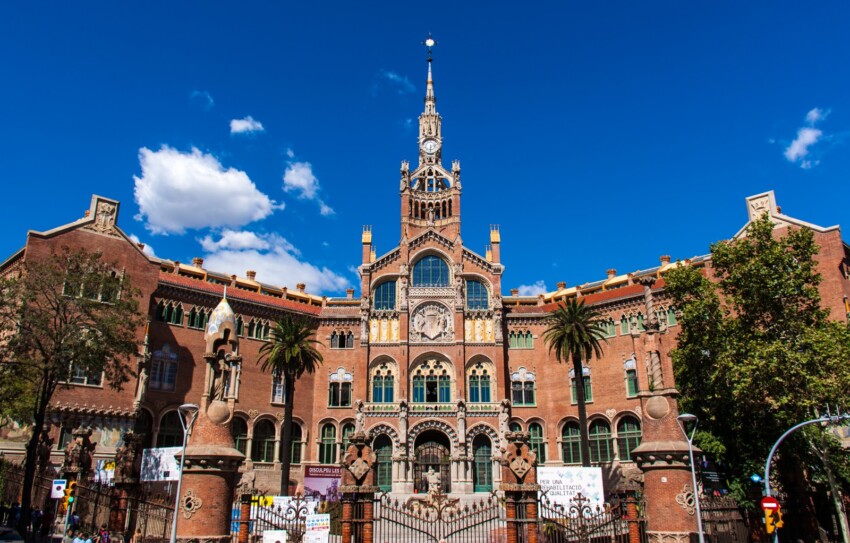
Barcelona’s Modernist Route (Ruta del Modernisme de Barcelona in Catalan) is an itinerary that will take you on a discovery of the Barcelona of Gaudí, Domènech i Montaner and Puig i Cadafalch, the architects who, together with others, made Barcelona the world capital of Modernism.
This route allows you to see splendid residences, surprising houses, the temple that became the symbol of the city and a huge hospital, but also includes more humble buildings for everyday life such as pharmacies, shops, or objects such as lampposts and benches: 120 works in all, which show that Art Noveau put down strong roots in Barcelona and today Modernism is still a living and breathing current in the city.
The official guide to the route, Guía de la Ruta del Modernismo de Barcelona, the most comprehensive book on Modernism in Barcelona, has been produced and can be found in the Modernism Centres Institut Municipal del Paisatge Urbà, in Av. Drassanes, 6-8, and Centre del Modernisme – Pavellons Güell, in Av. de Pedralbes, 7. The guide includes a map of Barcelona’s Modernism itinerary showing all 120 works.
The simple purchase of the guide includes discounts of up to 50% on the entrance ticket to all the modernist monuments in the city, as well as for local itineraries in 13 other municipalities in Catalonia.
In Barcelona’s Modernism Centres it will also be possible to purchase the complete Modernist Itinerary package, which, in addition to the guidebook, includes a guide with a map to modernist bars and restaurants.
It is possible to follow the route of the Modernist Itinerary with the help of some signs on the ground that are part of the city’s urban landscape. These are small red stones fixed to the pavement that mark the main sections of the itinerary, following the modernist buildings along the rest of the route.
To make it easier to discover Barcelona’s modernist heritage, the guide is structured around a single recommended itinerary with some branches to admire all the works. The entire route, including visits to all the monuments open to the public, could take from four days to a week.
For those who choose to do the Barcelona Modernist Route in a day, the guidebook suggests a special route that leaves out all the branches. It can be completed in a full day and also provides time to visit one of the monuments open to the public. To take advantage of the natural light, during winter the guidebook recommends completing the entire route and then returning to visit the inside of the monument the next day.
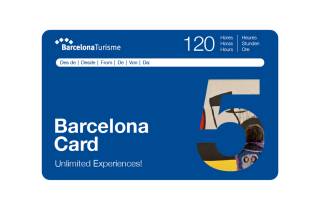
City Card allow you to save on public transport and / or on the entrances to the main tourist attractions.



 Hotel
Hotel  Budget accommodations
  Apartments
  Family Hotel
  Luxury Hotel
  Resorts