If you love non-conformism and originality, the Ribera is the neighbourhood for you, so liberal and rebellious. This is where the political movements of workers, anarchists and Catalan nationalists were born in the last century.
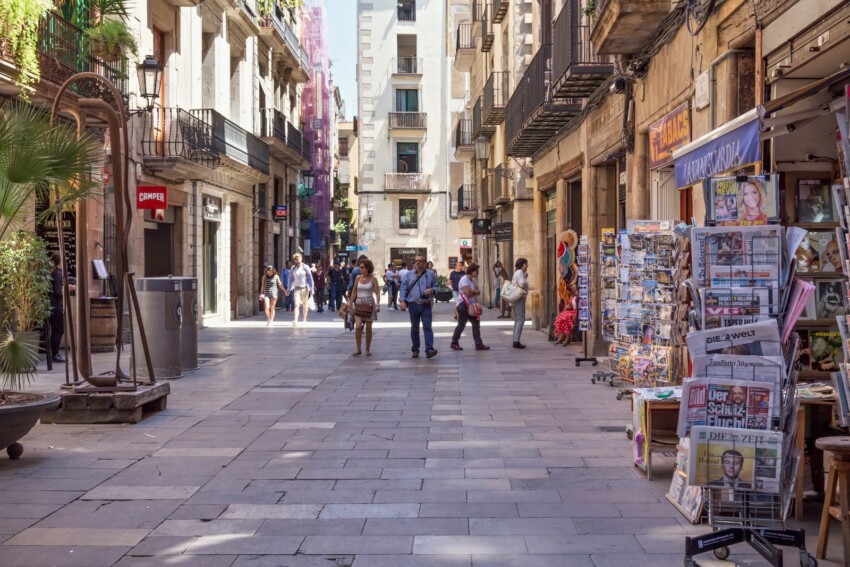
In its picturesque and claustrophobic streets you will see many young artists in action and observe new trends: the district is a riot of festivals, dances, social activities and street decorations.
It is a real pleasure to stroll through the alleys, admire the shop windows of unknown talents, the original art galleries and sip an aperitif sitting in the beautiful hidden squares or on one of the city’s terraces.
When we refer to La Ribera, we actually consider a rather large area, which exactly is divided into three neighbourhoods: La Ribera proper, Sant Pere and El Born. The latter is located in the southern part, between the Barrio Gotico, Barceloneta and the Parc de la Ciutadella. This is where most of the attractions are concentrated, which is why La Ribera and El Born often refer to the same area of Barcelona. So be careful not to get confused!
La Ribera is a narrow quadrangle between the Barrio Gotico and the Vila Olimpica del Poblenou. It is bordered to the south by the Ronda Litoral avenue, which separates it from the Barceloneta, while to the north it fades into theEixample. As mentioned, the most important part of the Ribera is the area of El Born, which occupies its southern quadrant, up to the Parc de la Ciutadella.
Things to do in La Ribera
There are so many things to see in the Ribera and the Born. It’s worth noting that, although they are internationally renowned attractions, they often receive far fewer visitors than the ‘classic’ things to see in Barcelona, so you’ll find yourself walking around in a much more real, less touristy and locals-inhabited neighbourhood.
Parc de la Ciutadella
1Passeig de Picasso, 21, Ciutat Vella, 08003 Barcelona, Spain
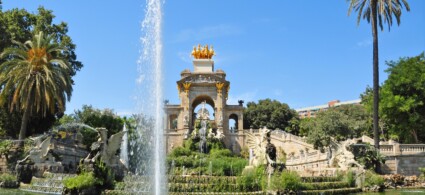
The Parc de la Ciutadella, Barcelona’s true green lung, is no ordinary park. It owes its name to the fact that it was built on the former grounds of the city fortress, in the image of the Jardins de Luxembourg in Paris.
The demolition of the military citadel in 1869, built a century earlier by Philip V, was significant for Barcelona’s boom with its attractions for the Universal Exhibition of 1888. The result was a park that architect Josep Fontseré adapted to the needs of the famous fair.
Nearby, it is possible to rent a rowing boat to row in the pond, while free guided tours in Catalan and Spanish are held on Saturdays and Sundays. For the public there is the Escala d’Honor (Stairway of Honour) and the various solemn halls leading to the Saló de Sessions, the semicircular auditorium where the Parliament meets.
The Passeig de Picasso side of the Parc de la Ciutadella is lined with numerous buildings constructed for the Universal Exhibition, or shortly before. To the south are several museums, while to the northwest of the park, Passeig de Lluís Companys is bordered by the modernist Arc de Triomf, designed by Josep Vilaseca.
Picasso Museum
2Carrer de Montcada, 15-23, Ciutat Vella, 08003 Barcelona, Spain
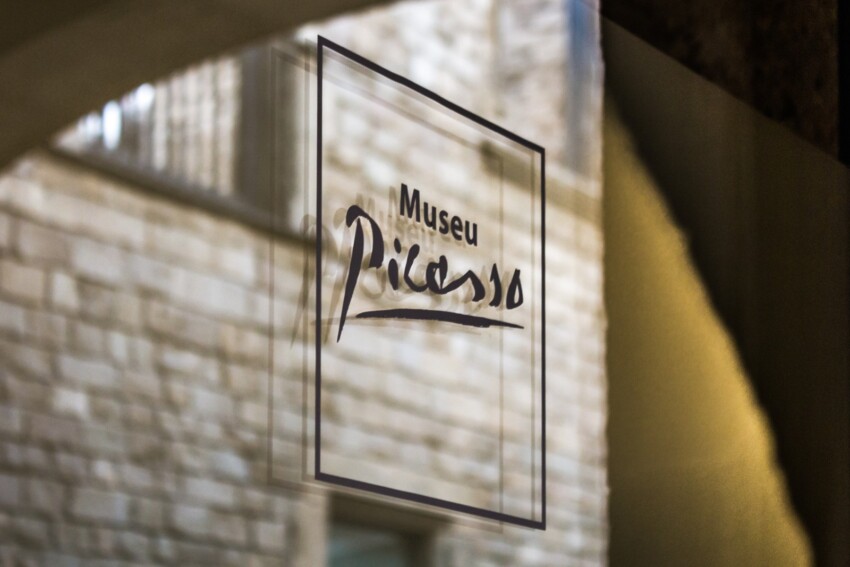
Among the main attractions of the Ribera and Born is the museum dedicated to Spanish artist Pablo Picasso. Located along Carrer de Montcada, it showcases more than 4,000 works created mainly in the early stages of his career.
It was in Barcelona, in fact, that the young Picasso spent his apprenticeship years, which is why the city council decided to dedicate a museum to him in the beautiful Palau Aguilar in the 1960s. Today, the Picasso Museum in Barcelona covers five buildings and is a real city treasure, a must-see if you are an art lover.
3C/ Palau de la Música, 4-6, Ciutat Vella, 08003 Barcelona, Spain
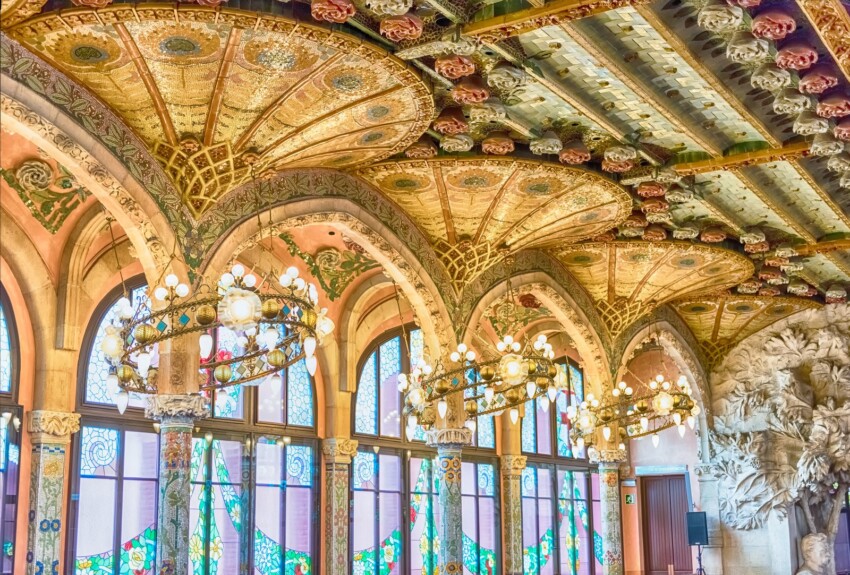
Among the most beautiful buildings from the Catalan Modernist period that can still be admired in the city today is the Palau de la Musica Catalana. Listed on the UNESCO World Heritage list together with the Recinte Modernista of Sant Pau, it is home to the Catalan choral society Orfeò Català, and is open to visitors all year round.
Conceived as a music garden by the architect Lluis Domenech i Montaner who designed it in the early 20th century, it is located in the Sant Pere della Ribera area, not far from Via Laietana, which marks its western border, beyond which lies the Barrio Gotico. The palace is beautiful from the outside but especially from the inside, where you can admire an incredible skylight and the sumptuous concert hall.
4Plaça de Santa Maria, 1, Ciutat Vella, 08003 Barcelona, Spain
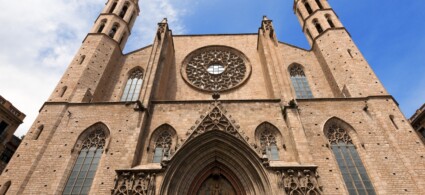
In a maritime city like Barcelona, a place of worship dedicated to the patron saint of sailors could not be missing. It is the basilica of Santa Maria del Mar, almost hidden in the narrow streets of the Born, a short distance from the Picasso Museum. Also known as The Cathedral of the Sea, it dates back to the 14th century but has been revised over the years, both inside and out.
When you visit it, you will be astounded by the beauty of the main nave, with very tall columns almost a record for the Middle Ages, the period in which it was built. The main rose window is also very beautiful, although it is a reconstruction as the original was destroyed by an earthquake centuries ago, while it is worth going down to the lower floor, where there are the tombs of some of Barcelona’s medieval brotherhoods.
Moco Museum
5Carrer de Montcada, 25, Ciutat Vella, 08003 Barcelona, Spain
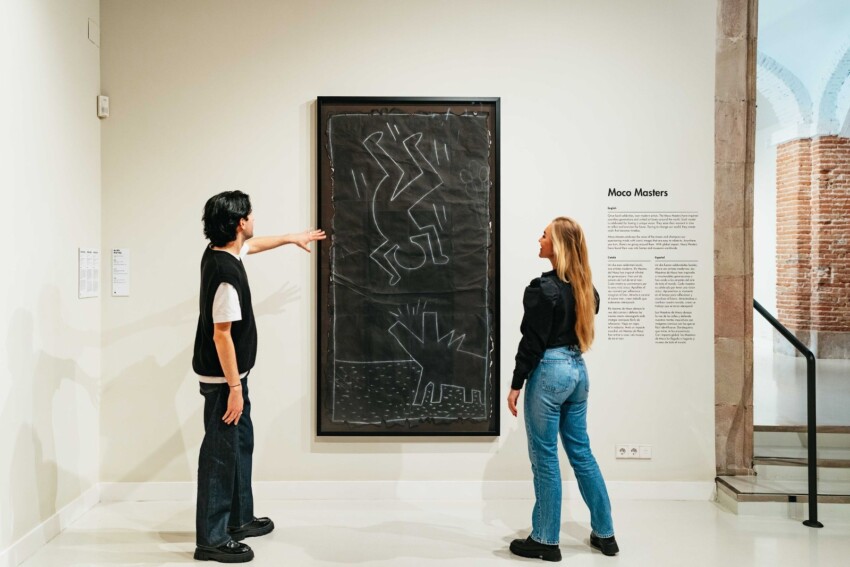
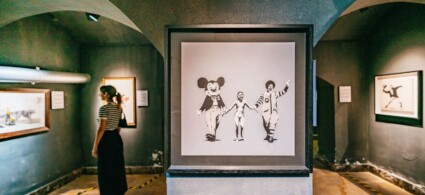
Barcelona is a future-oriented city, and you will realise this when you visit the Moco Museum, short for Modern Contemporary. It is a museum of modern and urban art, created with the aim of making art accessible to all. On display are works by the likes of Salvador Dalí, Andy Warhol, KAWS, Keith Haring and Bansky, to whom the city has dedicated its own museum.
The Moco Museum in Barcelona is located in a building that contrasts with the works on display, as it is a historical building dating back to the 15th century, formerly the residence of several Spanish noble families. The two main sections of the museum are called Modern Masters and Contemporary Masters, the former being dedicated to modern art, the latter to contemporary art.
6Carrer de Trafalgar, 34, Ciutat Vella, 08010 Barcelona, Spain
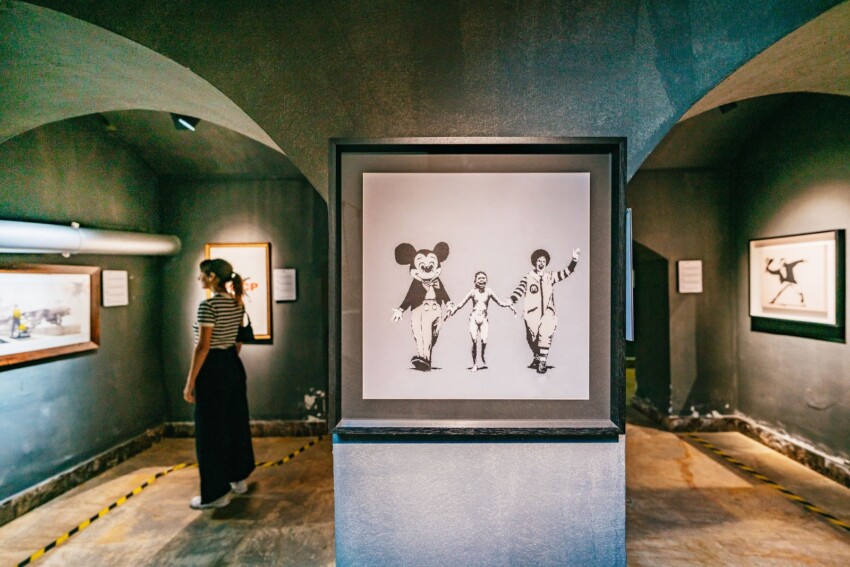
If after the Picasso Museum and the Moco Museum your thirst for art has not yet been quenched, wandering around the narrow streets of the Ribera and the Born you will also find the Bansky Museum.
Dedicated to the famous Bristol artist of unknown identity, it exhibits over 130 works that speak of politics, society and ethics. Bansky is one of the hottest modern street artists and most appreciated by critics and the public alike, and his strong desire to talk about topical issues could only lead to the opening of a museum in Barcelona, a city that makes the avant-garde its strong point.
During the exhibition you will come across some of Bansky’s most famous creations, such as the ‘girl with a balloon’ and the ‘girl frisking a soldier’.
7Arc de Triomf, Ciutat Vella, 08018 Barcelona, Spain
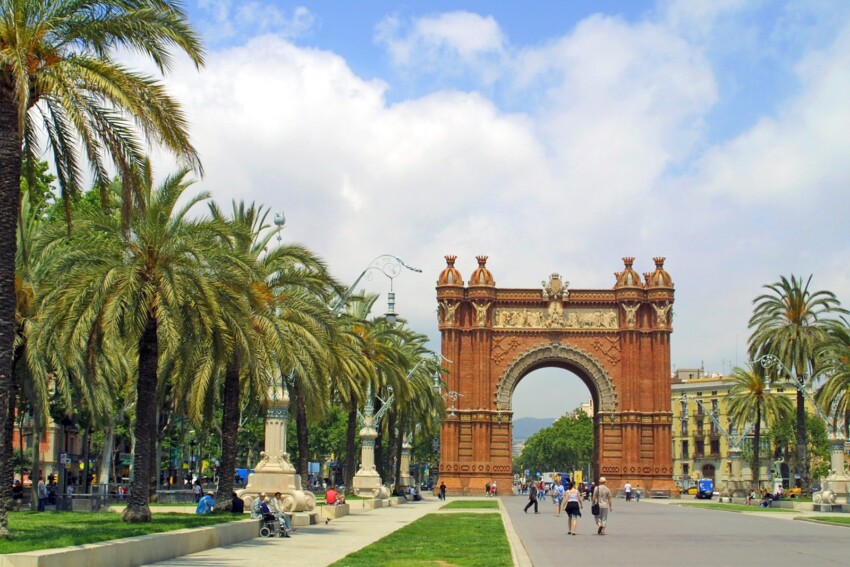
Barcelona also has its own triumphal arch, known by the Catalan name of Arc de Triomf, which, however, does not celebrate victories in war but was the entrance, one can really say triumphal, to the Universal Exhibition held in the city in 1888.
It is a singular monument that became a symbol of Barcelona’s modernity at the end of the 19th century. Designed by architect Josep Vilaseca, it has a classical layout but is built of brick and decorated in the neo-Mudejar style, so fashionable at the time of its construction. The unique combination of brick, a material rarely used in commemorative architectural works, and the elaborate decoration makes this monument something unique.
Barcelona Zoo
8Parc de la Ciutadella, Ciutat Vella, 08003 Barcelona, Spain
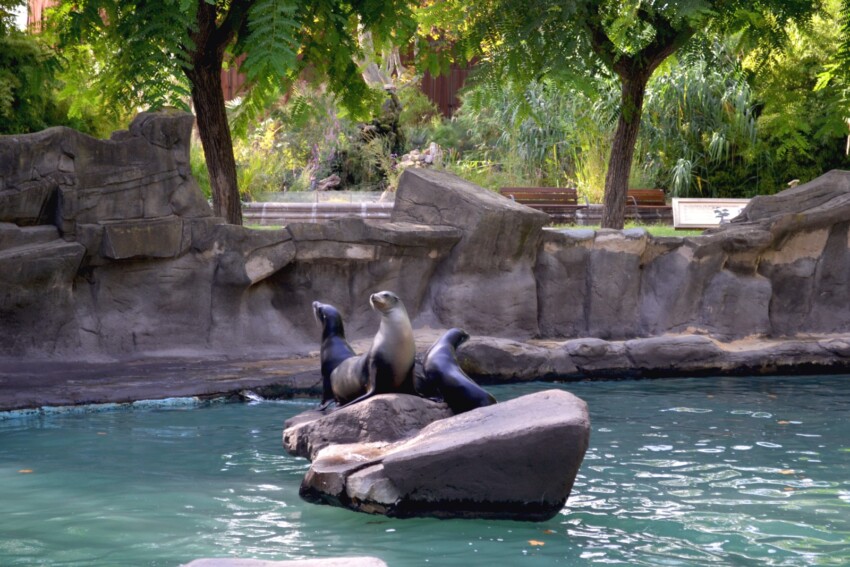
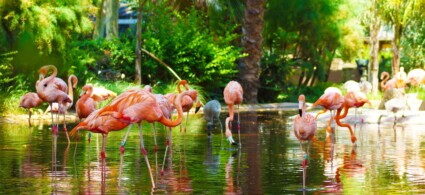
Take a break from museums and monuments and treat yourself to a day of family fun by visiting the Barcelona Zoo in the Parc de la Ciutadela. Opened in 1892, the zoo is now an important centre for study, research and conservation and a tourist attraction visited by over a million visitors every year.
It is divided into 11 areas dedicated to different species and ecosystems, with a total of around 4000 animals belonging to 400 different species, including some very rare specimens of endangered species. The zoo’s iconic animals are the white gorilla Snowflake and the orca Ulysses.
9Mercat del Born, Plaça Comercial, 12, Ciutat Vella, 08003 Barcelona, Spain
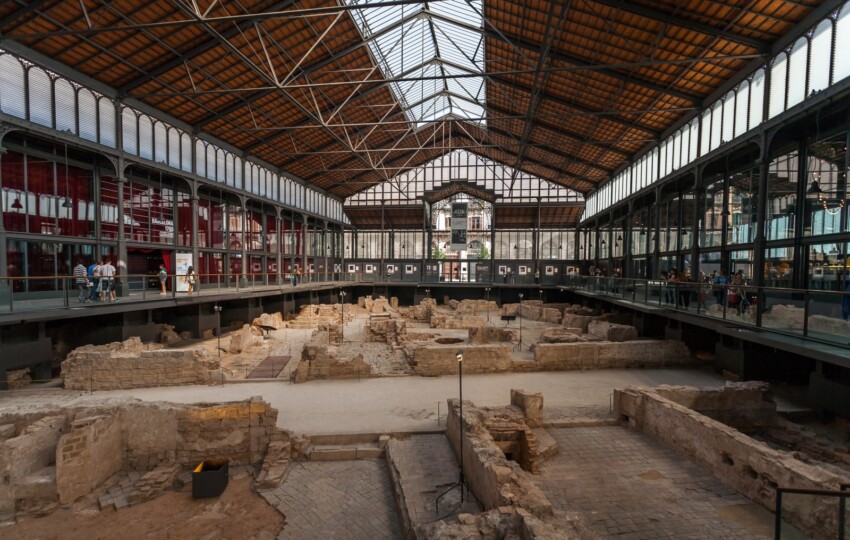
The Born Market is a former public market and currently one of the most important iron buildings in Barcelona. It is located in the south-eastern part of the Ribera district and is the largest covered square in Europe; the construction of the building marked the beginning of the Modernist period in Catalan architecture. The Born Market building has a rectangular shape, with two intersecting domed buildings and four smaller naves; the structure is supported by iron columns with a flat roof covered with transparent glass tiles.
The building was designed in 1873 by architect Antoni Rovira, who also designed the Mercat de Sant Antoni, and was constructed between 1874 and 1878 under the supervision of engineer Josep Maria Cornet i Mas. The Born Market began operations in 1878 and from there became Barcelona’s most important market until 1971, when it ceased its wholesale activities in favour of the opening of the Mercabarna, located in the city’s Zona Franca.
After its closure in 1971, restoration work on the Born Market started and finished several times: each successive new city government had a different idea for planning the use of such a large space. The final plan for the restoration of the building, which was finally implemented in 2013, was to expose the underground ruins to visitors, preserving the surrounding space in order to use it as a cultural centre, restaurant and as a museum of the war of succession. At the same time, it is now possible for pedestrians to pass freely through Passeig del Born via the other side leading to the Parc de la Ciutadella.
Carrer de Montcada, the street of the Ribera palaces
10Carrer de Montcada, Ciutat Vella, 08003 Barcelona, Spain
Carrer de Montcada is the famous ‘street of palaces’ in the La Ribera district. The street, or ‘carrer’, contains Gothic works such as the 15th-century Palau Aguilar, home of the Picasso Museum, or the Palau de Cervelló. It is one of the earliest examples of town planning in the city, as this area was the commercial heart of medieval Barcelona.
Five of the buildings on the east side of the street have been connected to house the Museu Picasso. Across the street, other buildings house what is now the Museu de Culture del Mon de Barcelona. Not only Gothic but also medieval, Renaissance and Baroque palaces, whose prestigious doors open to reveal their beautiful stone courtyards. These jewels testify to Barcelona’s rich and glorious medieval past, after all, this is the main street that during the city’s past history housed the area’s noble families.
Carrer de Montcada still preserves numerous examples of medieval palaces, such as Palau Aguilar, Palau Meca and Palau Baró de Castellet, which houses Barcelona’s Picasso Museum, and Renaissance ones, including Palau de Cervelló and the beautiful baroque Palau Dalmases.
Chocolate Museum
11Carrer del Comerç, 36, Ciutat Vella, 08003 Barcelona, Spain
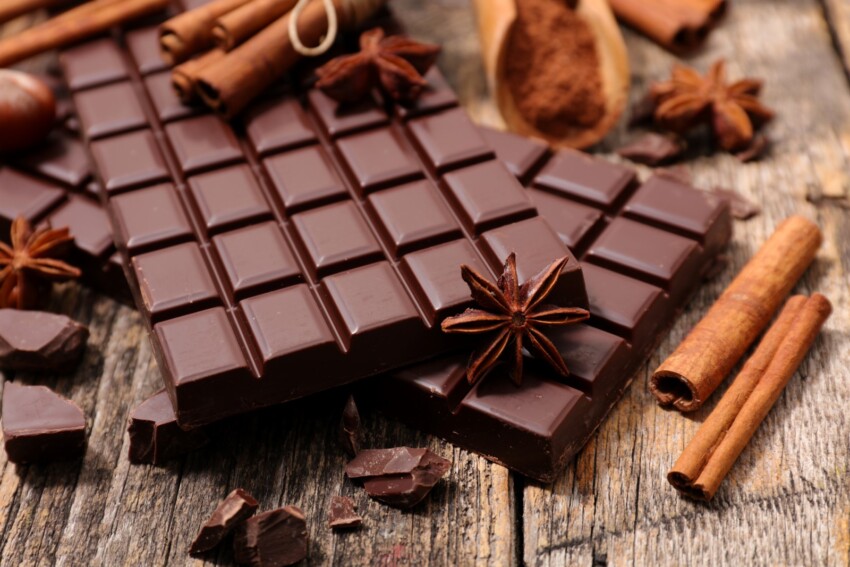
Did you know that Spaniards are extremely fond of chocolate? To this sweet speciality, the Barcelona Confectionery Guild has dedicated an entire museum, called Museo de la Xocolata in Catalan.
The museum traces the history of chocolate from its arrival in Europe to the present day, but more engaging than the permanent exhibition are the numerous workshops organised by the museum. There is something for all ages. A few examples? Little ones can paint with chocolate, while adults can learn how to combine chocolate and wine.
In the following map you can see the location of the main places of interest mentioned in this article.
Where to eat in the neighbourhood
Despite being practically a stone’s throw from the Cathedral, the Ribera is often ignored by tourists, except for those visiting the Picasso Museum who are forced to wander its narrow streets. But it is a really big mistake to miss out on this area of Barcelona as it is very authentic, very well maintained and frequented by many locals, who flock to the streets every night and crowd the clubs, bars and restaurants.
Here there is a huge choice of restaurants and tapas bars, in many of which you can eat ‘pintxos’. A ‘pintxo’ (in Catalan, ‘pincho’ in Spanish) is nothing more than a toothpick, used to hold together a small sandwich and its bulky ingredients. One eats as many as one wants, and at the end the waiter counts the remaining toothpicks on the plate to establish the price of dinner: often a pintxo costs one euro or a little more, making dinner cheap and fun.
There are plenty of other restaurants in the Ribera offering often sophisticated cuisine, but also ethnic, Mexican, Japanese, Thai and fusion.
Where to stay in La Ribera
La Ribera, as mentioned, is a very large neighbourhood and very close to the centre. It is therefore not difficult to imagine that there are plenty of places to stay. There are lodgings for all tastes, ranging from the large 4-star hotels, especially along Via Laietana, to the small flats and bed and breakfasts located in the neighbourhood’s narrow streets, in typical houses finely renovated by locals and converted into holiday homes. Of course, there is no shortage of smaller, 2 or 3-star hotels, equipped, however, with all the main services.
The strong point of finding accommodation in La Ribera is undoubtedly its proximity to Barcelona’s main attractions: you will almost certainly spend a little more to sleep, but at the same time you can save money on public transport because you will move almost exclusively on foot. Speaking of which, if you are travelling with a rental car (or your own) be aware that parking is really hard to come by. Therefore, make sure that the establishment you choose provides private parking, or an agreement with one of the garages in the area.
We offer best rates If you find it cheaper we refund the price difference.
Free cancellation Most properties allow cancellation without penalty.
We're available 24 hours a day For any problem call Booking.com.






 Hotel
Hotel  Budget accommodations
  Apartments
  Family Hotel
  Luxury Hotel
  Resorts