Barcelona: 1-Day Ticket to Barcelona Zoo
3.515 reviews
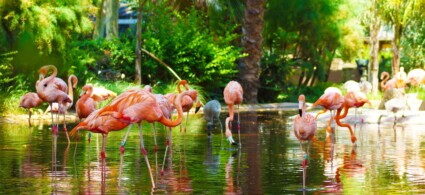
Enjoy a day in Barcelona's Zoo. The zoo hosts more than 4,000 animals from 400 different species.
Buy now
From 23,00€ per person
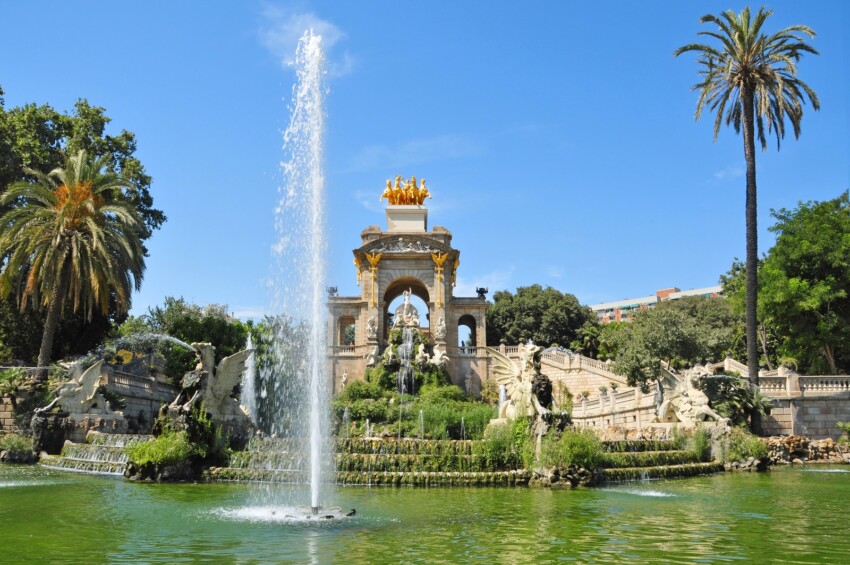
The Parc de la Ciutadella is a beautiful park located to the east of the historical centre of Barcelona. When it was built, it was the only park in the city, which is why its importance is also enormous on a socio-cultural level. It covers an area of no less than 31 hectares, and within it are beautiful monuments, sculptures, important buildings and even the Barcelona Zoo.
The park takes its name from the Citadel, a real fortress that stood on this site in the 18th century, and which alone housed as many as 8000 residents. Destroyed in the mid-19th century by the local authorities, the Citadel of Barcelona was radically transformed into a park by architect Josep Fontsere, partly in anticipation of the 1888 Expo, which gave Barcelona a lustre never before seen in Europe. During the Exposition, the Parc de la Ciutadella was its beating heart, and from then on it has maintained all its charm and splendour to this day.
The park is very popular in both summer and winter, with young people, families, couples and children. You can also take advantage of one of the many lawns for an outdoor picnic or to enjoy the early hours of the evening: around 7 p.m. it fills up with musicians and street performers, ideal for an impromptu aperitif!
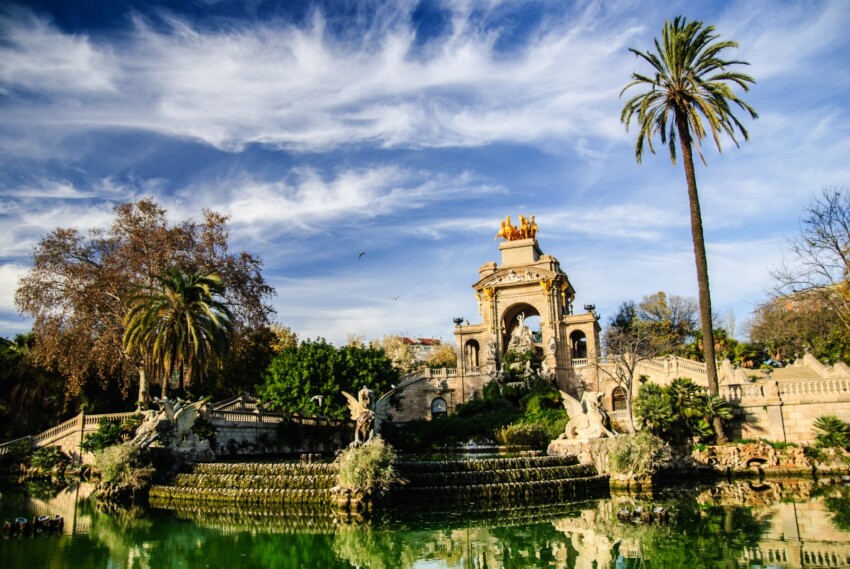
Given its size, even just walking around the Parc de la Ciutadella can easily take half a day. Spend as much time as you like walking along the tree-lined avenues and flower-bed-lined streets, and stop on the benches to relax. But then, devote yourself to the main monuments within the park, of which there are many and beautiful.
The first of the monuments in the Parc de la Ciutadella is technically not located within the park, but at the end of the tree-lined avenue that is an extension of it – the Passeig de Sant Joan – and serves as its northern boundary. Originally created as a gateway to the 1888 Expo, the Arc de Triomphe was built by architect Josep Vilaseca i Casanovas using red brick and inspired by the Mudejar style.
Imposing and massive, on its front is a sculpture called Barcelona rep les nacions, or ‘Barcelona welcomes the nations’, by artist Josep Reynes, while on the sides of the arch are allegories of agriculture, industry and commerce. Interestingly, unlike many other triumphal arches located more or less in every city in Europe, Barcelona’s is not a military arch, it does not romanticise war and is not intended to celebrate Spanish military victories.
The castle of the three dragons is a modernist building located within the park, which served as a cafeteria and restaurant for Expo 1888. It is located at the end of the street leading from the Arc de Triomphe to the park, at the western end practically at the junction of Passeig de los Pujades and Passeig de Picasso. It is perfectly visible from the street if you pass by here by car or bus, thanks mainly to its imposing profile of brick and iron, with the typical shape of a castle, the four towers on either side and a perimeter walkway.
The Neptù (Neptune) fountain is located at the northern corner of the park, opposite the lake. Inaugurated in 1881 without much fuss, it was expanded the following year in anticipation of Expo 1888. Lavish details were added including the quadriga de l’Aurora, a gilded sculpture at the top, the two imposing side staircases, a Venus sculpture and much more. The symbol of the fountain obviously remains Neptune, the Roman god who is its main element.
Between the Neptune and the lake is a life-size concrete sculpture of a mammoth, painted in the colours of this enormous extinct mammal. Nothing overly distinctive, except that whether we like it or not, the mammoth has become one of the symbols of the park. For one of the most typical souvenir photos of the Parc de la Ciutadella, have your photo taken while suspended while sitting on its trunk.
The Palau del Parlament de Catalunya is the most important building in the Parc de la Ciutadella, as it represents exactly what its name implies: the parliament of Catalonia. Originally, the structure was contained within the old citadel, of which it represented the arsenal. Once demolished, it lost its original function until it was converted into the Parliament of Catalonia in 1932. Dissolved during and after the Spanish Civil War, it was re-established in 1980, when it was also renovated.
The palace, built in the shape of a cross with a dome in the centre and four courtyards, covers 5500 square metres and is made of stone from the Montjuic hill and red tiles. It is part of Barcelona’s list of cultural assets of local interest (BCIL).
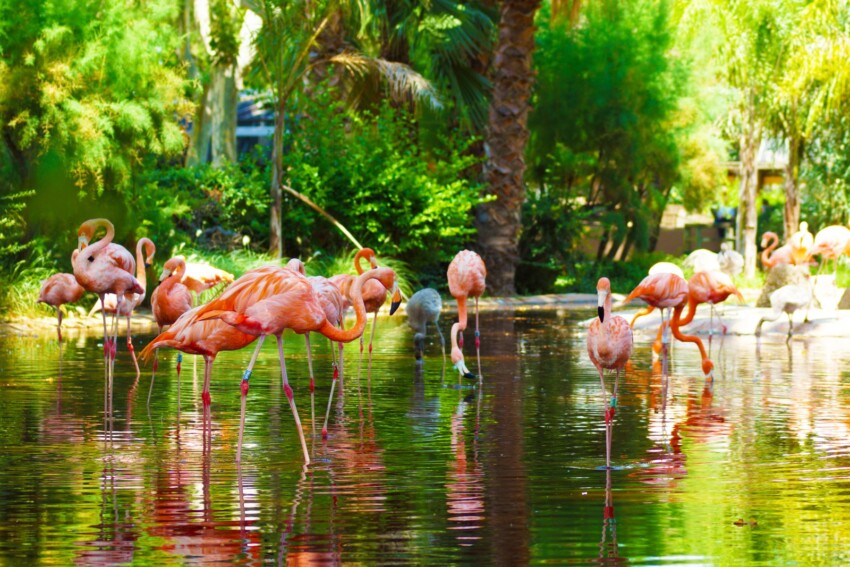
Finally, a special mention for the Barcelona Zoo. It is located in the Parc de la Ciutadella and is home to about 7500 animals , covering an area of 13 hectares, i.e. a little less than half of the entire park. Opened in 1892 on a piece of land that remained unused after Expo 1888, it is one of the oldest zoos in Europe and a must for all nature and animal lovers, especially if you are travelling with children in tow.
At the Barcelona Zoo, 10 natural environments have been recreated, in which you can admire the animal species that live there in nature. There is also a section designed especially for children, the Farm, where among goats, pigs and cows they can understand the importance of animals in everyday life. Interesting is the Palmeral, a palm grove where parrots and parakeets fly around in peace.
Being semi-centrally located, it is plausible that you can reach the Parc de la Ciutadella comfortably on foot without much difficulty. In fact, it is located immediately east of the Born, practically behind the Centre for Culture and Remembrance. Occupying a very large area, it is easy to enter it from practically any direction: from the Barceloneta by crossing the Estaciò de Franca, from the Barrio Gotico by crossing the Born along Carrer dels Assaonadors, from the Eixample by walking down Passeig de St. Joan and so on.
The park’s distance from Barcelona’s landmarks is never too great: a 12-minute walk from the Cathedral, 15-20 minutes from Las Ramblas, 5 minutes from the Picasso Museum, 10-15 minutes from Barceloneta. You can also walk to the Sagrada Familia in about half an hour, but in this case it is perhaps more comfortable and restful to use bus number 19, which leaves from the Mallorca stop just behind the church and stops at the Arc de Triomphe.
If you decide to get there by metro, the dedicated stop is Ciutadella Vila Olimpica, located between the park and Port Olimpic, to the east, while by train, in addition to the Estaciò de Franca station, you can also get off at the Arc de Triomf station, to the north of the park, where local regional trains R1, R3, R4 and R7 run
The Parc de la Ciutadella marks the eastern border of central Barcelona. Located beyond the Born district, it is also very close to the Estaciò de Franca.
City Card allow you to save on public transport and / or on the entrances to the main tourist attractions.



 Hotel
Hotel  Budget accommodations
  Apartments
  Family Hotel
  Luxury Hotel
  Resorts