Bestseller
Barcelona: Montjuïc Cable Car Roundtrip Ticket
From 19,00 €
Buy the ticket
Called ‘Mount of the Jews’ because of a Jewish cemetery that stood here in the Middle Ages, Montjuïc is a mountain located between the city and the sea and is a favourite destination for tourists.
A spectacular way to reach the hill of Montjuïc is to take the cable car: the views over the city are spectacular and it is certainly the most impressive means of transport.
Montjuic is a hill located between the port of Barcelona and Placa d’Espanya. The northern part coincides with the district of Poble Nou, which displays an elegant atmosphere and buildings dating back to the 19th century. There are numerous accesses to Montjuic, from whichever area you want to reach it, there will be no lack of roads or transport ready to take you to its summit.
There are many attractions not to be missed during a visit to Montjuïc Hill. Take your time, because they can easily take up an entire day.
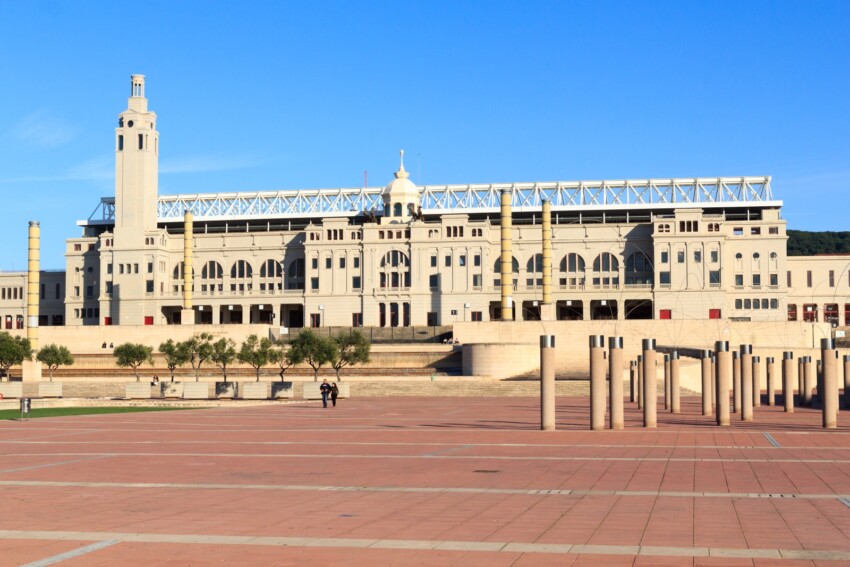
Even if you are not a football or sports fan, the Barcelona Olympic Stadium will undoubtedly be one of the highlights of your visit to Montjuic. It is in fact a historic building in Barcelona, built for the 1929 Expo held in the city. With its 54,000 seats, it was named after Lluis Companys i Jover, the former president of Catalonia executed by Franco’s regime.
There is also an interesting museum inside, which traces the history of the stadium and sport in Barcelona. In addition, the Olympic Stadium is very often used for events in the city, especially football, rugby or athletics matches.
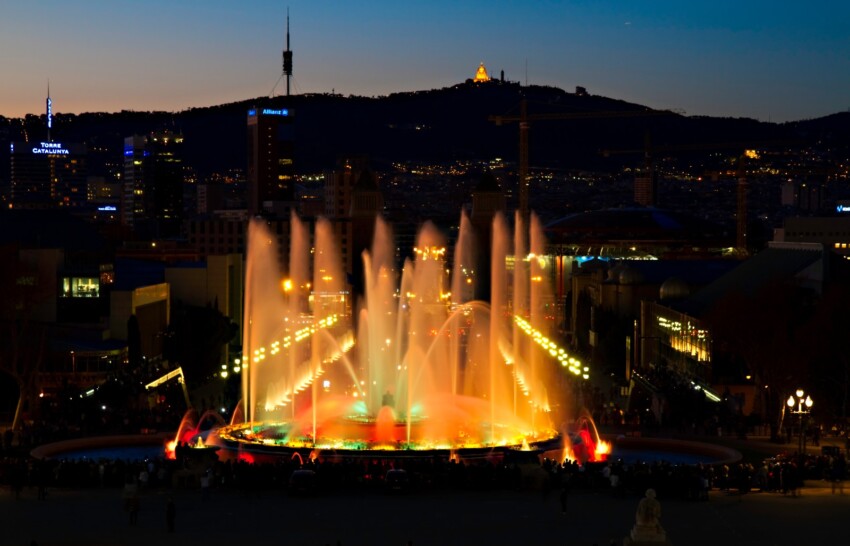
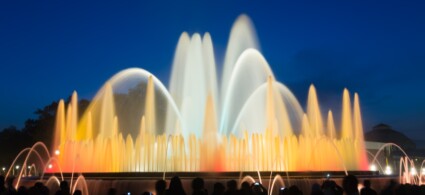
One of the most typical postcards of Barcelona that you can see in any souvenir shop is of a beautiful illuminated fountain with the majestic MNAC building in the background. This is the Font Magica of Montjuic, a free show of dancing fountains, lit to the rhythm of music according to many different choreographies ranging from classical music to 21st century songs.
It is estimated that each year the Font Magica show is seen by over 2 million people, also because it is completely free. Remember, however, that the times vary throughout the year, but roughly the show is held on weekends from 7 to 10 p.m., depending on the time of sunset.
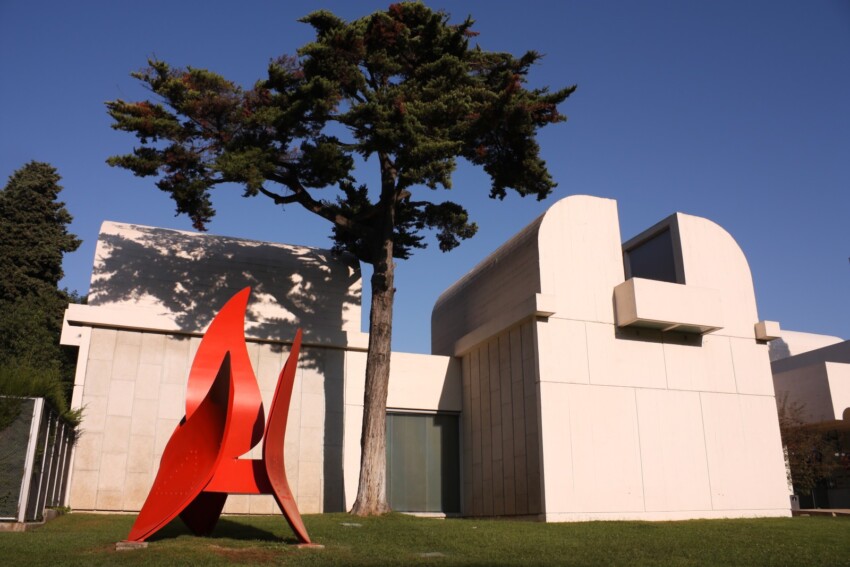
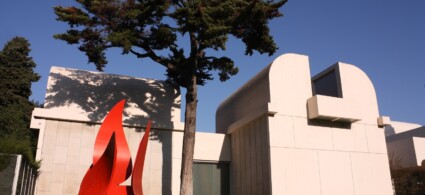
The Joan Miró Foundation is one of the places in Barcelona where the memory of the Catalan artist is best preserved. It was founded by Miró himself in 1971, and today it houses more than 300 paintings and 150 sculptures, as well as tapestries and drawings. Besides the works placed in the Foundation by Miró himself, there are also many objects and works donated by well-known Barcelona families or celebrities.
Even if you are not a fan of Miró, it is worth visiting the Fundaciò from the outside, as it is housed in a building that can easily be said to be one of the most important in contemporary Barcelona, designed by the famous architect Josep Lluís Sert.
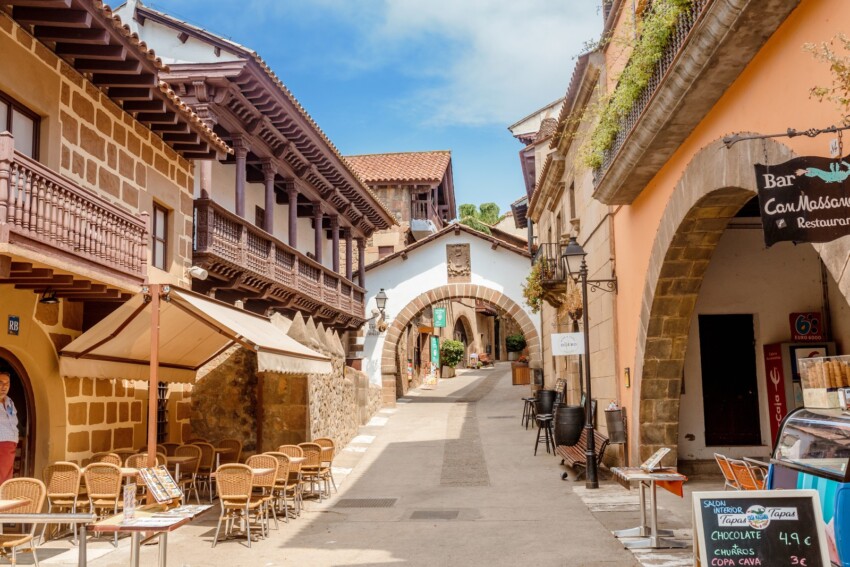
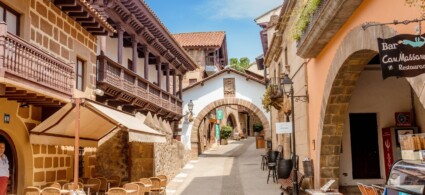
If your visit to Barcelona is also your first time on Spanish soil, don’t miss the opportunity to visit Poble Espanyol, an open-air museum housing 117 1:1 scale buildings recreating a typical Spanish village.
It is hard to imagine that today, with the Catalan independence movement stronger than ever, Barcelona would be celebrating Spain. However, in 1929, the year it was inaugurated, the situation was not exactly like today. Ideologies aside, the Poble Espanyol is also very interesting to see flamenco shows, artisans at work, stalls selling typical food from the various Spanish regions and much more.

At the top of the hill of Montjuic, at a height of almost 200 metres above sea level, is the Castle, a defensive site built in 1640, which has survived practically intact to the present day, after changing purpose over the centuries, first becoming a prison (it was here that the president of the government of Catalonia, Lluís Companys, was executed in 1940) and then a museum, opened by Franco and only closed in 2009, when it was taken over by the Barcelona city council.
During a visit to Montjuic Castle, you can discover the neoclassical entrance bridge, the austere façade, the ramparts with their walkways, the terrace with a beautiful view of Barcelona’s port, the watchtowers and the covered walkway that surrounds the entire fortification.
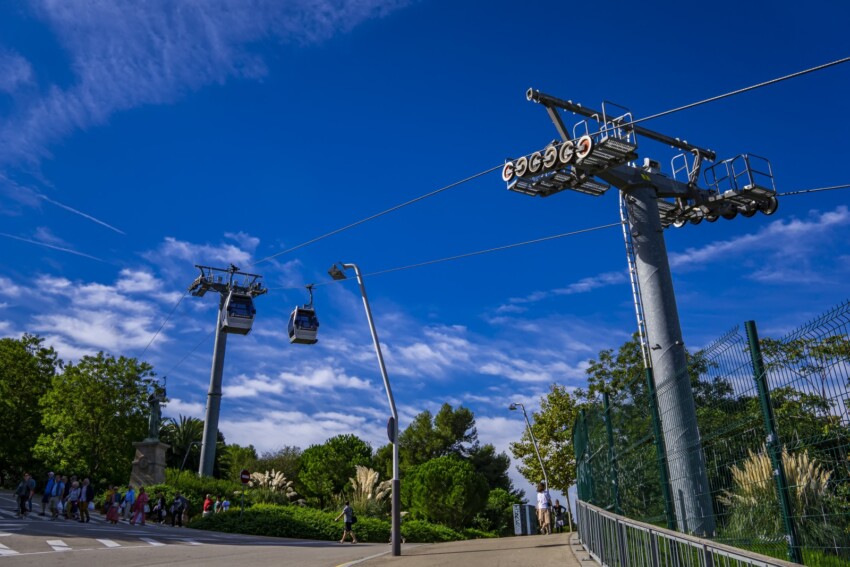
The Montjuïc cable car is an aerial transport system that connects the port of Barcelona with the top of Montjuïc Hill. Inaugurated in 1969 for the 1992 Barcelona Olympics, it was designed to provide a scenic and picturesque way to reach the top of the hill. The cable car ride offers spectacular views of the city of Barcelona, the port and the Mediterranean Sea.
The Montjuïc cable car has become an icon of the city of Barcelona, not only for its functionality as a means of transport, but also for its symbolic importance and the breathtaking panoramic view it offers visitors. It has become a mandatory stop for tourists visiting the city and remains a unique and impressive way to reach the beautiful Montjuïc area.
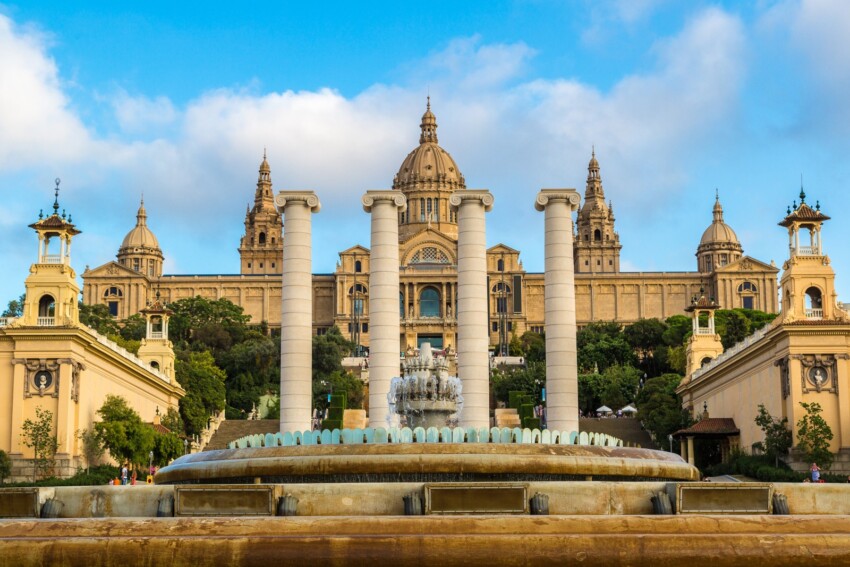
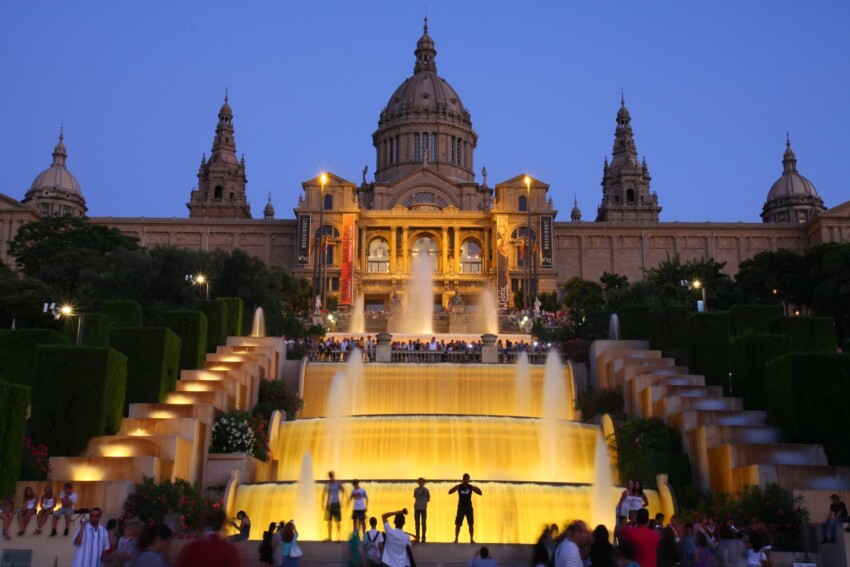
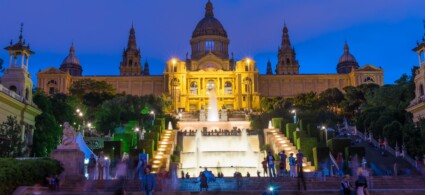
The Museu Nacional d’Art de Catalunya, also known by its acronym MNAC, is one of the most important museums in the city of Barcelona. It is located on the slopes of Montjuic hill, in front of Plaza de Espanya, and is famous for its remarkable collection of Romanesque paintings and exhibitions of 19th and 20th century Catalan art.
Inside the Museu Nacional d’Art de Catalunya are numerous art collections, relating to different historical periods and very different from each other, but nevertheless worth a thorough visit.
Home to the Museu Nacional d’Art de Catalunya is the Palau Nacional, a huge Italian-style building constructed in the early 20th century, which was declared a national museum in 1990, the year in which it was heavily renovated inside and out, faithfully based on the original plans.
The Palau Nacional is a truly enormous building, covering over 50,000 square metres and its façade is adorned with a large dome inspired by St. Peter‘s Basilica in the Vatican, flanked by two smaller domes, while four towers modelled on the cathedral of Santiago de Compostela stand at the corners of what is known as the Oval Hall, a 2300 square metre space used as a stage for civic and cultural events in the city.
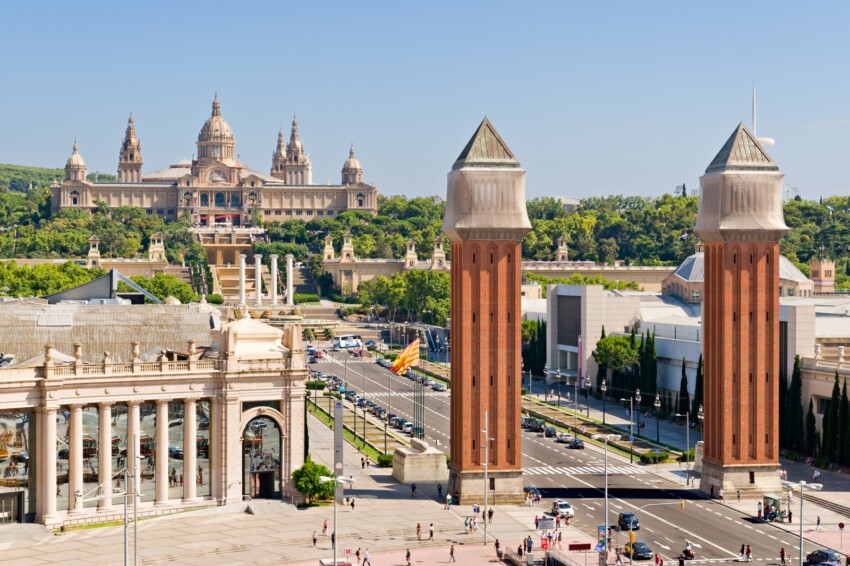
Plaça d’Espanya, also known as Plaza de España in Spanish diction, is one of the most important squares in Barcelona. It was built for the Universal Exhibition of 1929, at the foot of the hill of Montjuic.
It is a very large square and is the intersection of some of the city’s main streets: Gran Via de les Corts Catalanes, Avinguda del Parallel, Carrer de la Creu Coberta and Carrer de Tarragona. From Plaça d’Espanya you reach the Palau Nacional, which today houses one of Catalonia’s most important museums, the Museu Nacional d’Art de Catalunya (MNAC), via Avinguda de la Reina Maria Cristina.
Plaça d’Espanya is also a key junction for Barcelona’s transport network: there is the Espanya metro station, which crosses the L1, L3 and L8 lines, as well as stops for about 30 bus lines between day and night, and also has an underground train station. There is also anAerobus stop at Plaça d’Espanya, which connects El Prat airport to Plaza Catalunya.
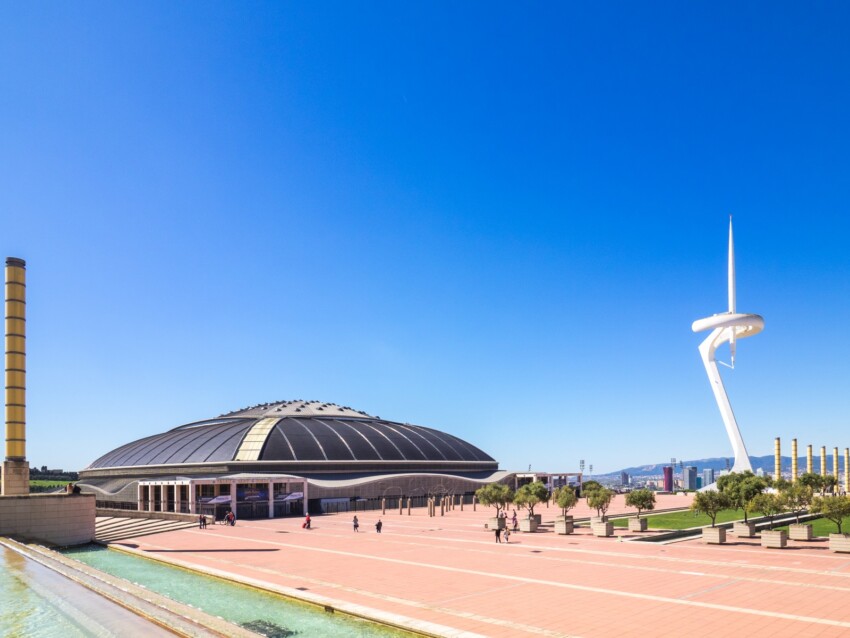
The Palau Sant Jordi is a multifunctional arena located on the hill of Montjuic in Barcelona. It was built to host some competitions of the 1992 Olympic Games and was inaugurated only shortly before, in 1990. It is an integral part of the so-called ‘Olympic Ring of Montjuic’, which brings together the sports facilities in the area including the Olympic Stadium, the Piscine Picornell and the INEFC building.
The Palau Sant Jordi is the most used structure from the 1992 Olympic period in Barcelona today, and hosts all kinds of sports events, as well as shows and concerts. Its maximum capacity is 24,000 seats, although a recent municipal ordinance restricted this number to a maximum of 18,000 for security reasons.
The architect who created the Palau Sant Jordi is the Japanese Arata Isozaki, known in Spain for having also designed the University Park in Santiago de Compostela, the Casa del Hombre in La Coruna, the Bodegas La Horra in Burgos and many other buildings.
The structure was inaugurated on 21 September 1990, two years before the start of the Olympic Games in Barcelona. It is considered a masterpiece of modern architecture and engineering; its structure and materials give it great flexibility, allowing the arena to adapt to accommodate various types of events.
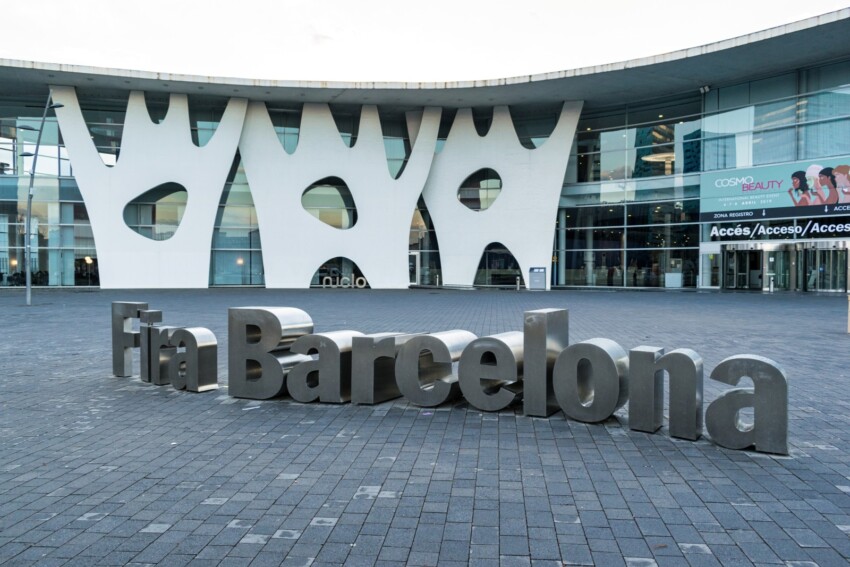
The Fira de Barcelona is the city’s exhibition centre and one of the most important in Europe. Each year it organises numerous fairs and congresses, attracting leading companies from different sectors from industry to telephony, from food to textiles, to showcase their new products and promote their business. Fira de Barcelona generates an economic impact of some EUR 2.5 billion in two large exhibition spaces: Montjuic, overlooking Plaça d’Espanya, and Gran Via.
The Avinguda de la Reina Maria Cristina connects Plaça d’Espanya to the Museu Nacional d’Art de Catalunya. It is named after Maria Cristina of the Two Sicilies, Queen and Regent of Spain. Part of the Fira de Barcelona is located here, an area where trade, technology and fashion fairs are held annually. It is also the starting point of the Barcelona Marathon. The twin Venetian-style towers are the symbol of the street, built right at its junction with Plaça d’Espanya.
Forty-seven metres high and seven metres wide, they are twin towers built of stone and red brick, on top of which is a pyramid-shaped copper roof. They were modelled on the appearance of the bell tower of St. Mark’s Basilica in Venice and were designed by local architect Ramon Reventos, built between 1927 and 1929 as part of the development of the area for the 1929 Barcelona International Exhibition.
The Teatre Grec is a late 19th-century style open-air amphitheatre set in a garden. Unlike what its name might imply, it does not date back to the ancient Greeks, but rather to 1929, the year the Expo was held in Barcelona, by the Catalan architect Ramon Reventòs.
The theatre can seat almost 2000 spectators and every summer hosts performances of the Festival del Grec, an international festival of theatre, dance, music and circus; a beautiful open-air restaurant opens for the occasion.
Another valuable legacy of the 1929 Barcelona Expo is the Pavellò Mies van der Rohe, officially known as the Pavellò alemany (‘German Pavilion’) because of the name of its architect, the German Ludwig Mies van der Rohe.
Conceived with the idea of being Germany’s contribution to the 1929 Exhibition, the Pavellò Mies van der Rohe is built in a modern style, with a simple form and extravagant materials such as marble, travertine and onyx, so much so that it seems out of place within the monumental architecture of Montjuic.
Inside, one of its highlights is the sculpture called Dawn by Georg Kolbe, which is reflected in a pond.
The CaixaForum is a cultural centre located in a former textile factory, designed by Josep Puig i Cadafalch. Today it is owned by the Barcelona non-profit bank La Caixa, and houses around 800 works by Spanish and international artists on rotating display, as well as numerous temporary exhibitions that are set up in an exhibition space of over 12,000 square metres. The complex also includes a multimedia library, a restaurant and several classrooms.
In the following map you can see the location of the main places of interest mentioned in this article.
Montjuic is a hill, so there are no hotels on its summit. You will, however, find plenty of accommodation and facilities where to stay in the neighbourhoods on its slopes, starting with Poble Sec, on the northern side, where there are indeed many hotels, adding to the flats and bed and breakfasts to form a really inviting offer of beds, both because of the proximity to Montjuic itself and because the rest of Barcelona is easily accessible thanks to the Paral-lel metro station, which is right alongAvinguda del Paral-lel.
Another trendy area for sleeping in Montjuic is Placa d’Espanya, from which you can ascend the hill via the elegant Avinguda de la Reina Maria Cristina. This is also where Barcelona’s trade fair centre is located, so it is also very convenient for those who are in town on business: not for nothing are there many business hotels and 4-star hotels in the Placa d’Espanya area.
The hill of Montjuic occupies a large area of Barcelona's territory: it stretches from the harbour area to Placa d'Espanya, south of the Poble Sec district.
City Card allow you to save on public transport and / or on the entrances to the main tourist attractions.


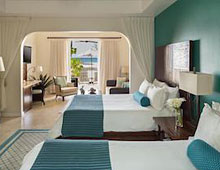 Hotel
Hotel 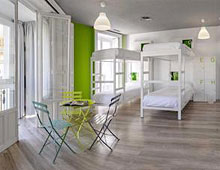 Budget accommodations
 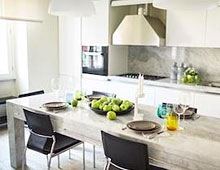 Apartments
  Family Hotel
 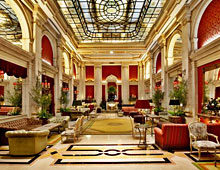 Luxury Hotel
  Resorts