Barcelona's economic and commercial centre, the Eixample is also the district where three of the city's top attractions (and many others) are concentrated.
If the Old Town is the heart of Barcelona and the verdant mountains of Tibidabo and Montjuic are its lungs, Eixample is the city’s nerve centre, its economic and commercial hub.
When, in the mid-19th century, the city began to expand beyond the medieval walls, this neighbourhood began to take shape, with its regular grid pattern. In the 20th century, it continued to expand and Modernism was seen in the new buildings.
Today, the area is teeming with avant-garde designer shops, charming cafés, trendy bars and gourmet restaurants, catering for a rather sophisticated clientele.
The Eixample is a very large area, stretching roughly from Placa d’Espanya to Placa de les Glories Catalanes, including such outstanding monuments as the Sagrada Familia, Casa Batllò and Casa Milà. Squeezed between Gracia and the Barrio Gotico, it is clearly distinguishable on the map because of its grid pattern, with the streets intersecting at right angles, reminiscent in some ways of large American cities.
Things to do in the Eixample
The Eixample is home to some of Barcelona’s top attractions, alongside some semi-unknown ones. Here are what they are, to make the most of the neighbourhood.
Sagrada Família
1Carrer de Mallorca, 401, Eixample, 08013 Barcelona, Spain
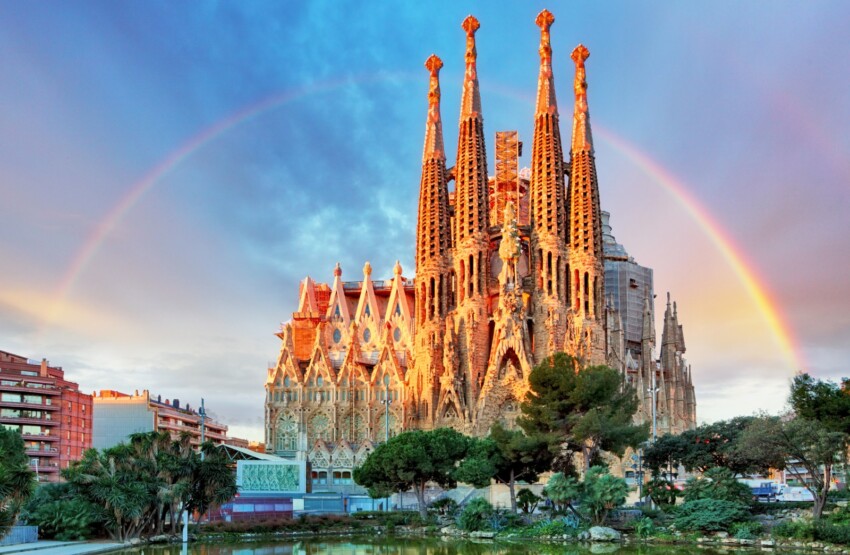
Impossible not to start the list of things to see in the Eixample with the Sagrada Familia, the undisputed symbol of Barcelona. This huge church designed by Gaudi is his most majestic work, so imposing and complex that the famous architect died before being able to finish it.
To this day it is still a building site but after a few years of stoppage, work is in full swing; the completion date for some is estimated at 2026, for others 2032. Regardless of the completion date, the church can be visited from the inside, where you will be amazed after admiring the beauty and magnificence of the main nave. There is also the possibility of climbing some of its towers to admire a beautiful panorama of Barcelona, while if the queue at the entrance scares you (and you didn’t buy tickets online), you can already feel satisfied by visiting the garden square behind, named after Antoni Gaudí.
2Pg. de Gràcia, 43, Eixample, 08007 Barcelona, Spain
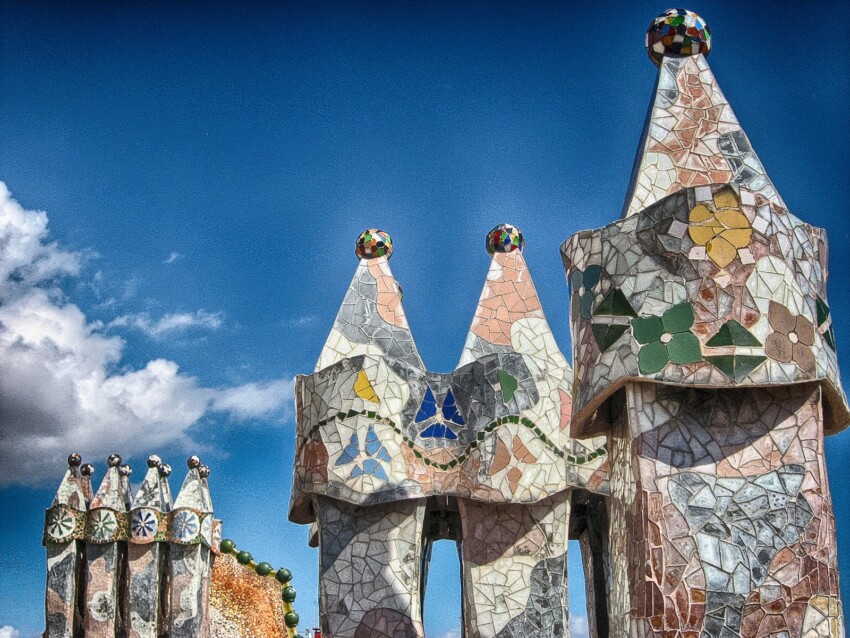
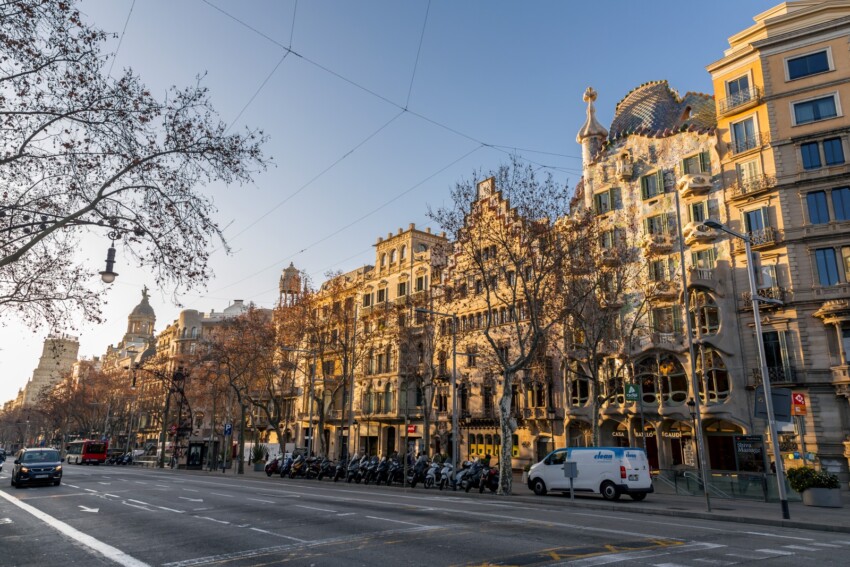
In the Eixample, along Passeig de Gracia, is one of Gaudí’s most curious works. It is Casa Batllò, at number 43. An incredibly creative façade in shades of green and blue conceals even more intriguing elements inside. The tour will take you from the elegant entrance hall with its main staircase up to the main floor, where the Batllò family lived, and further up you will reach the attic, originally a storeroom and laundry room, and the roof terrace, where there are chimneys that recall the legend of St. George and the dragon.
3Pg. de Gràcia, 92, Eixample, 08008 Barcelona, Spain
Gaudi’s ‘other’ house along Passeig de Gracia is Casa Milà, known to everyone as La Pedrera. It is a three-block walk from Casa Batllò, so it is virtually impossible to visit one without also seeing the other. It is Gaudi’s last building before the Catalan architect started working on the Sagrada Familia. It was commissioned by Pere Milà i Camps, a 20th-century businessman, who was enraptured by the aesthetic solution Gaudí came up with, consisting of an undulating stone façade with wrought-iron balconies.
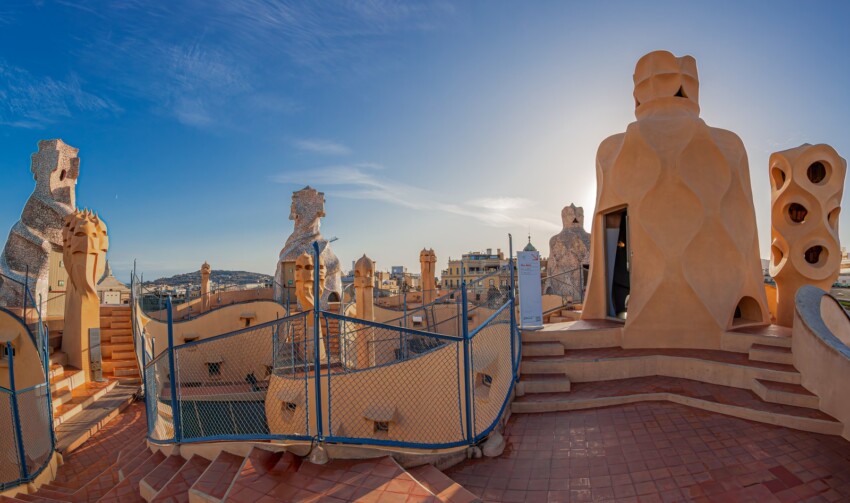
La Pedrera is a truly enormous house, much more than Casa Batllò: it has no less than 9 floors and an area of 1300 square metres per floor. The visit starts on the ground floor and you will have the opportunity to experience Gaudi’s ingenious ideas, made of hand-carved wooden doors and ornate furniture designed directly by Gaudi along with furnishings such as lamps and candelabras. As with Casa Batllò, one of the biggest surprises is when you get to the rooftop, where a majestic terrace richly decorated with chimney pots awaits you, from which the view of Barcelona – needless to say – is truly amazing.
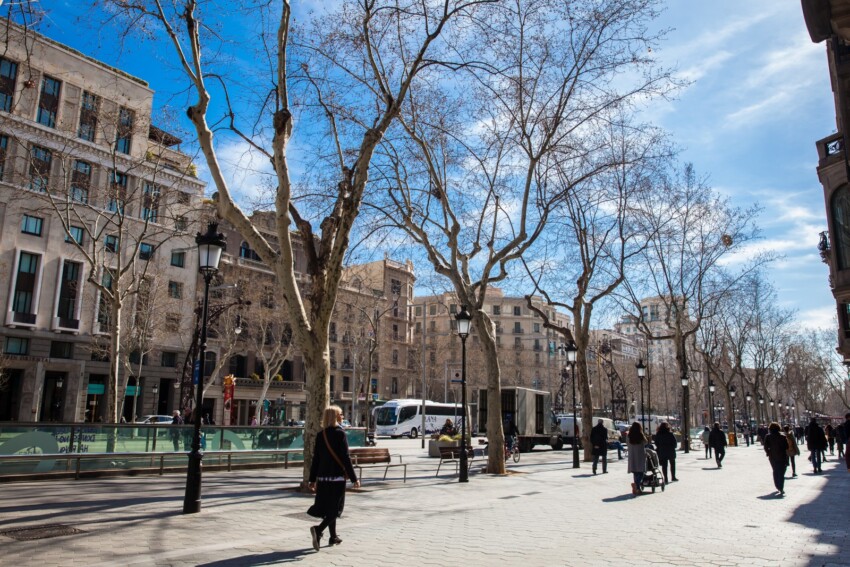
Passeig de Gracia is one of Barcelona’s main avenues and at the same time one of the most famous streets in Catalonia, thanks to its tourist importance, its shops and numerous buildings of modernist architecture, such as those of Antoni Gaudí and Lluís Domènech i Montaner, declared World Heritage Sites by UNESCO.
Passeig de Gracia is located in the central part of the city, connecting Plaza Catalunya with the Eixample district. In terms of popularity and charm it is comparable to the Champs Elysees in Paris, and this is also reflected by the fact that in terms of house prices it is the second most expensive street in the whole of Spain after Calle Preciados in Madrid.
Along Passeig de Gracia are numerous boutiques of the best brands and luxury shops. For this reason, its pavements are constantly traversed by locals and tourists, equally divided between shoppers and those who simply like to browse through shop windows. There are boutiques of Armani, Bulgari, Cartier, Chanel, Gucci, Valentino and Trussardi, as well as electronics, sports goods, jewellery and perfume shops of the most internationally renowned brands.
The Passeig de Gracia is also the ideal location for many luxury hotels. There is a wide range of accommodation on offer, catering for both visitors from Spain and international tourists. There are many high-end hotels, independent or from large international chains; the most iconic is the Hotel Majestic, opened in 1918 next to the Casa Milà. Celebrities such as Leon Felipe, Federico Garcia Lorca, Pablo Picasso, Joan Miró and Ernest Hemingway have stayed here, among others, but the most illustrious guest was undoubtedly Queen Maria Cristina of Habsburg-Lorraine.
Illa de la Discòrdia
5Pg. de Gràcia, 41, L'Eixample, 08007 Barcelona, Spain
Passeig de Gracia is overlooked by many of Barcelona’s historical buildings, four of which are located at theIlla de la Discordia, a block known for having buildings designed by four of Barcelona’s most important modernist architects: Lluís Domènech i Montaner, Antoni Gaudí, Josep Puig i Cadafalch and Enric Sagnier, placed practically side by side. Although the styles of the four architects are very different, the buildings stand very well side by side and blend in perfectly with their surroundings. The houses of the Illa de la Discordia are the Casa Lleó-Morera by Lluìs Domènech i Montaner, the Casa Mulleras by Enric Sagnier, the Casa Amattler by Josep Puig i Cadafalch and the well-known Casa Batllò by Antoni Gaudí.
Casa Lleó i Morera
6Pg. de Gràcia, 35, L'Eixample, 08007 Barcelona, Spain
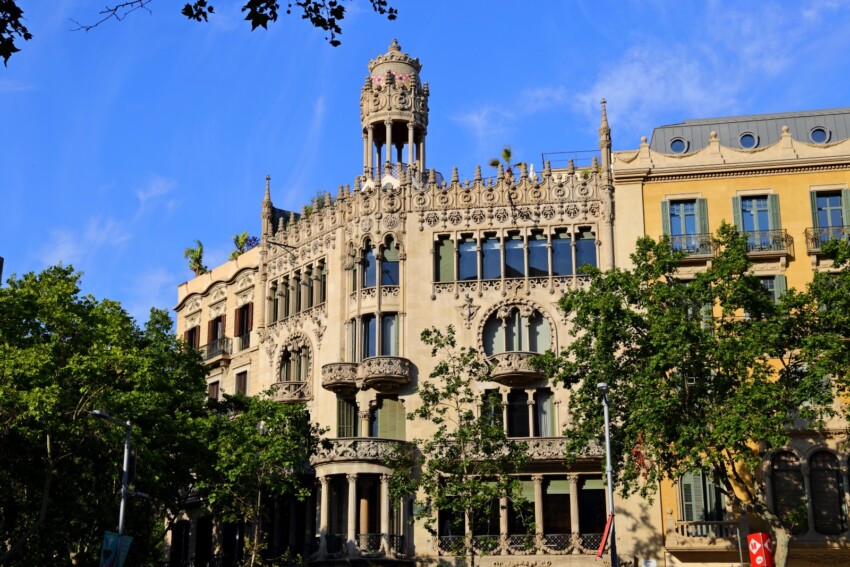
Casa Lleó i Morera is a building designed by modernist architect Lluís Domènech i Montaner, and is located at 35 Passeig de Gracia in Barcelona’s Eixample district.
Its origins date back to 1902, when Francesca Morera assigned Lluís Domènech i Montaner the task of remodelling the old ‘Rocamora house‘, built in 1864. She died in 1904, and the building was named after her son, Albert Lleó i Morera. The building is located on the corner of Carrer del Consell de Cent, and is one of the three important buildings of the so-called Illa de la Discordia (‘Block of Discord’ in Italian), which features four buildings next to each other by some of the most important Catalan modernist architects: Lluís Domènech i Montaner, Antoni Gaudí, Josep Puig i Cadafalch and Enric Sagnier.
The Casa Lleó i Morera is the only building of the four to have received the annual award of the Concurso anual de edificios artisticos established by the Barcelona city council, albeit in 1906. Unfortunately, the building nowadays has lost some of its most representative elements, such as the small temple at the top, now restored, and the sculptures located on the ground floor and mezzanine level. The building is also known to have been the residence of the well-known Cuban-Catalan photographer Paul Audouard.
Casa Amatller
7Pg. de Gràcia, 41, L'Eixample, 08007 Barcelona, Spain
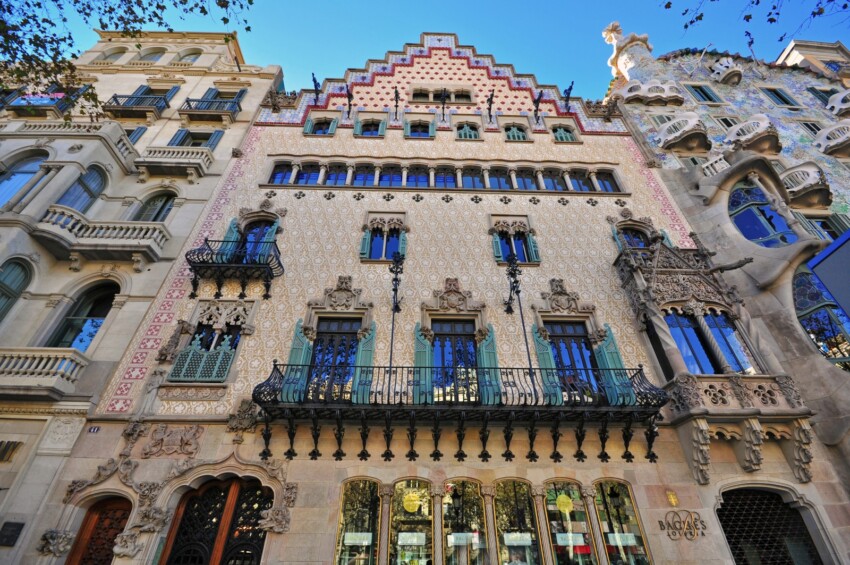
Casa Amatller is a modernist building in Barcelona, located next to Casa Batllò, Casa Mulleras and Casa Lleó Morera, along Passeig de Gracia, creating the famous block known as Illa de la discordia. It was designed by architect Josep Puig i Cadafalch between 1898 and 1900.
The Casa Amatller was the brainchild of the chocolate industrialist Antoni Amatller, who asked the Catalan architect Josep Puig i Cadafalch to design a model of an urban Gothic palace, with a flat façade, a central patio and a staircase giving the main access to the rooms.
On the façade one can admire the two asymmetrical doors connected by a statue of St. George created by sculptor Eusebi Arnau. All along the façade is graffiti that delicately blends with the ceramics. The main hall, as was normal at the time of its completion, was designed to facilitate the entrance of horse-drawn carriages; it has decorations and stained glass lamps and has two staircases, the more ornate and sumptuous of which leads to the main floor and the simpler one leads to the rest of the floors.
The style is a mix of Catalan and Flemish Gothic, characterised by the flat triangular shape of the upper part of the façade. Since 1960, the house has belonged to the Instituto Amatller de Arte Hispanico, a foundation created by the descendants of the photographer Antoni Amatller. The house was declared a historical monument on 9 January 1976.
8Carrer de Sant Antoni Maria Claret, 167, Horta-Guinardó, 08025 Barcelona, Spain
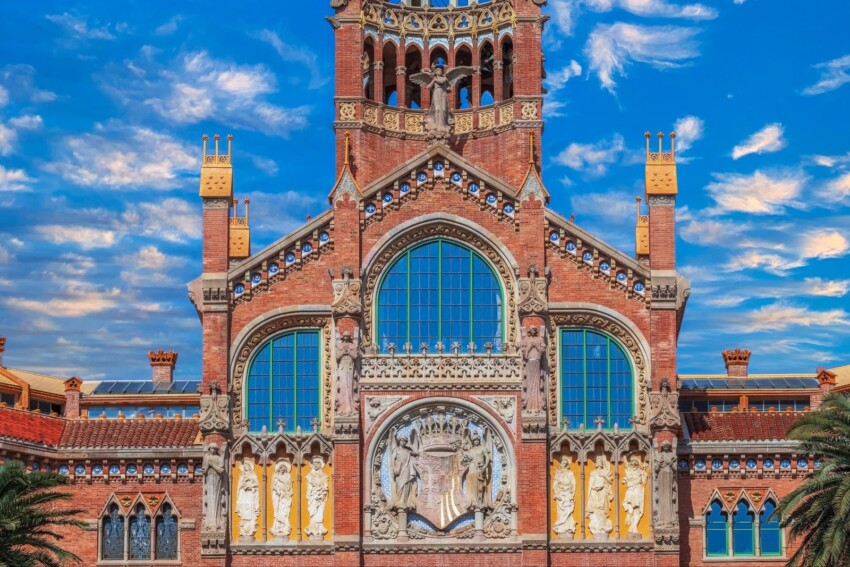
The Hospital de la Santa Creu i Sant Pau, in Spanish Hospital de la Santa Cruz y San Pablo, is a complex of buildings constructed in the Modernist style in Barcelona. It was designed by architect Lluis Domenech i Montaner, one of the main representatives of Catalan modernism, and built between 1902 and 1930 in two phases:
1902-1913: personally supervised by Domenech, which led to the construction of three modernist buildings
1920-1930: followed by Domenech’s son, Pere Domenech i Roura, who led to the construction of six more buildings in a more moderate modernist style
For the modernist architecture of the main building and its many pavilions, the Hospital de la Santa Creu i Sant Pau has been on the UNESCO World Heritage List since 1997.
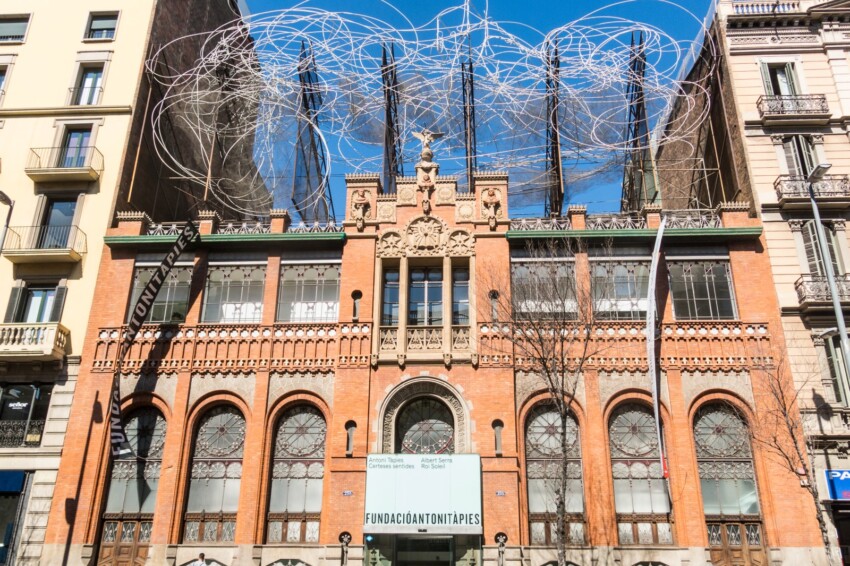
The Fundaciò Antoni Tàpies is an art museum in Barcelona: anyone who has walked through the Eixample district has certainly caught a glimpse of the beautiful modernist-style structure that houses it. It is the work of the modernist architect Lluís Domènech i Montaner, renovated and refurbished by architects Roser Amado and Lluís Domènech Girbau, and dates back to the years 1880-1881, that is, to that initial phase in the evolution of Catalan modernism.
The building was the first in the district to integrate the industrial and technological current, combining exposed brick and iron with the classical buildings of the city centre. The building is dominated by Nuvol i Cadira (Cloud and Chair), the enormous sculpture by the most important contemporary Catalan artist, Antoni Tàpies: the sculpture, with its distinctly modernist style, has become the emblem of the foundation of the same name.
The collection of the Fundació Antoni Tàpies consists mainly of works donated by Antoni Tàpies and his wife Teresa. There are a few exceptions, such as ‘Ocre i gris sobre marrò‘, donated by David K. Anderson. The number of works grows every year: between paintings, sculptures and drawings, books and engravings, the collection has examples of every aspect of Tàpies’ artistic production.
The body of work includes a selection of drawings and portraits from the 1940s, an important group of paintings from the 1950s and 1960s, a large number of works from the 1960s and 1970s, and more recent works from the 1980s and 1990s. The more recent works represent the most innovative contribution in terms of experimentation in style and materials.
10Carrer de València, 284, Eixample, 08007 Barcelona, Spain
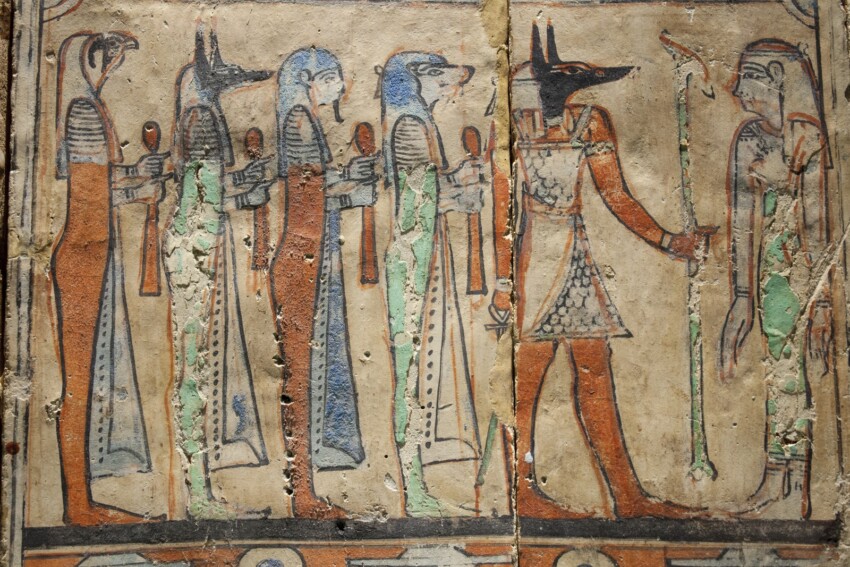
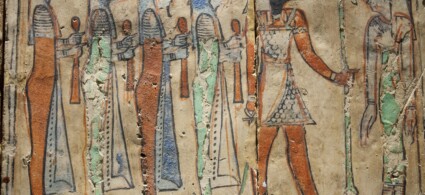
Located within the Clos Archaeological Foundation, the Egyptian Museum of Barcelona (in Catalan Museu Egipci de Barcelona) is a private, non-profit museum that aims to promote knowledge of the art and culture of ancient Egypt, in the city and surrounding areas.
This splendid collection of Egyptian art belonging to Jordi Clos comprises about 1,000 pieces from the era of the Egyptian pharaohs, and offers a journey through the different historical periods of one of the most prolific and mysterious civilisations of ancient times.
11Plaça de Catalunya, L'Eixample, 08002 Barcelona, Spain
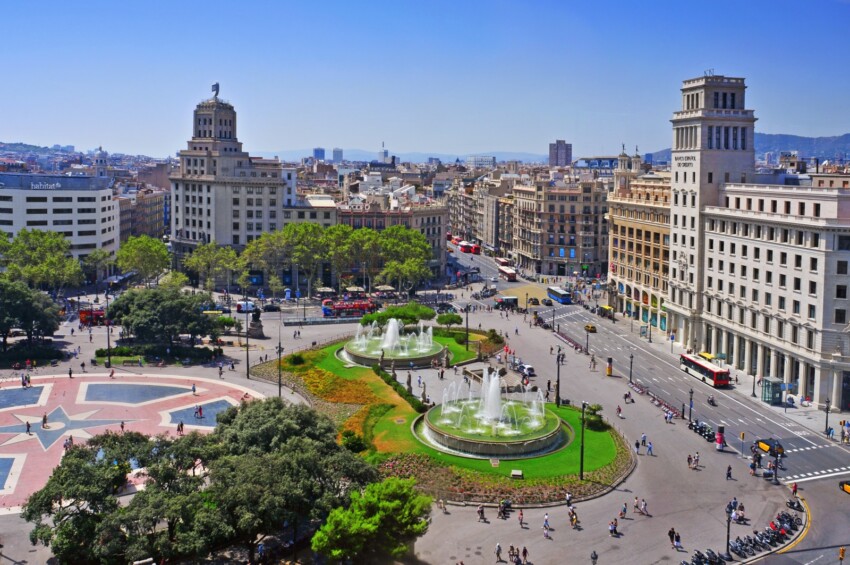
Plaça de Catalunya, also known by its Spanish name Plaza de Cataluña, is one of Barcelona’s main squares and one of the city’s nerve centres. It covers an area of 5 hectares and forms the junction between the historical core of the city and the Eixample district. Important arteries of Barcelona such as the Rambla, Passeig de Gracia, Avenida de Portal del Angel and Rambla de Catalunya start from here.
For those arriving at El Prat airport and choosing to reach the centre by Aerobus, Plaça de Catalunya is the first impact with Barcelona. It is indeed here that the shuttle has its terminus, but it is also here that the city’s metro system has one of its main interchanges: the L1 and L3 lines intersect here, as do the L6 and L7 FGC lines and the R1, R3 and R4 regional train lines.
Plaça de Catalunya is also the terminus of several daytime bus lines, and is a stop for practically all night bus lines.
Plaça de Catalunya is also notable for its many sculptures by famous artists on display around its perimeter, among which one should highlight Josep Clarà’s Diosa, Frederic Mares’ Barcelona or Pablo Gargallo’s el Pastor, as well as works by local artists such as Josep Llimona or Enrique Casanovas. The most recent work is the Monument to Francesc Macià by Josep Maria Subirachs, only placed here in 1991.
The work carried out underground in the square is considered of great urbanistic value, and includes the commercial galleries of the Avenida de la Luz; until the civil war of 1936-1939, its cafés and restaurants were the centre of the city’s literary and political splendour.
MMBCN, the Museum of Modernism
12Carrer de Balmes, 48, L'Eixample, 08007 Barcelona, Spain
Barcelona’s Museum of Modernism, also known by its acronym MMBCN, is the only museum in Europe specialising in this particular artistic current. It is located on Carrer de Balmes in Barcelona and is one of the most interesting museums to visit in the city for those who love architecture and art in general. The MMBCN opened in March 2010, and has since become a landmark in the city and one of the few museums in Europe dedicated to modernism.
The Museum of Modernism is located in the centre of the Eixample district, in a modernist building designed in 1902 by the architect Enric Sagnier i Vilavecchia, undoubtedly the most prolific of his era with more than 300 buildings to his credit inside and outside Catalonia.
The collection of the Museum of Modernism in Barcelona consists of a large number of works from different artistic disciplines and decorative arts, revitalised and renewed during the Modernist era. Each of the works represents the creative spirit of the artists of the second half of the 19th and early 20th century, and the technical and thematic variety denoted by the multidisciplinary character of modernism.
This variety in the works comes partly from the interior decoration of the large bourgeois houses built in the Eixample district or outside Barcelona, through paintings of everyday, social themes or even portraits, to decorative sculptures of a symbolic and literary character.
All of the works reflect the essence of anera of great importance for the Catalan territory, and the MMBCN’s collection is ideal for extending this highly creative cultural context: modernism as an artistic movement had a strong popularity in Barcelona with the aim of influencing the territory’s own style. The collection of the Museum of Modernism is a gathering of everything artists, sculptors and painters worked on during this period.
The Fundació Francisco Godia is a Barcelona institution founded in 1999 to keep Francisco Godia’s memory alive and to preserve his private art collection. The institution together with its museum began its activity in a building on Calle Valencia, moving in November 2008 to a modernist building, the Casa Garriga Nogues, located at Calle Diputación 250, not far from the Rambla de Catalunya.
At present, the Fundació Francisco Godia is once again private, but includes the entire wealth acquired in the 15 years it has been open to the public. One of its main objectives is to publicise the collection of works nationally and internationally and to study new museographic contexts.
The patrimony of the Fundació Francisco Godia is one of the most important private collections estimated in Spain. It is a collection of works that allows tourists to embark on a journey through the centuries in Spanish, especially Catalan, and international art from the 12th century onwards. It is an interesting place, rich in history, starting from its location, the Casa Garriga Nogues.
University of Barcelona
14Gran Via de les Corts Catalanes, 585, L'Eixample, 08007 Barcelona, Spain
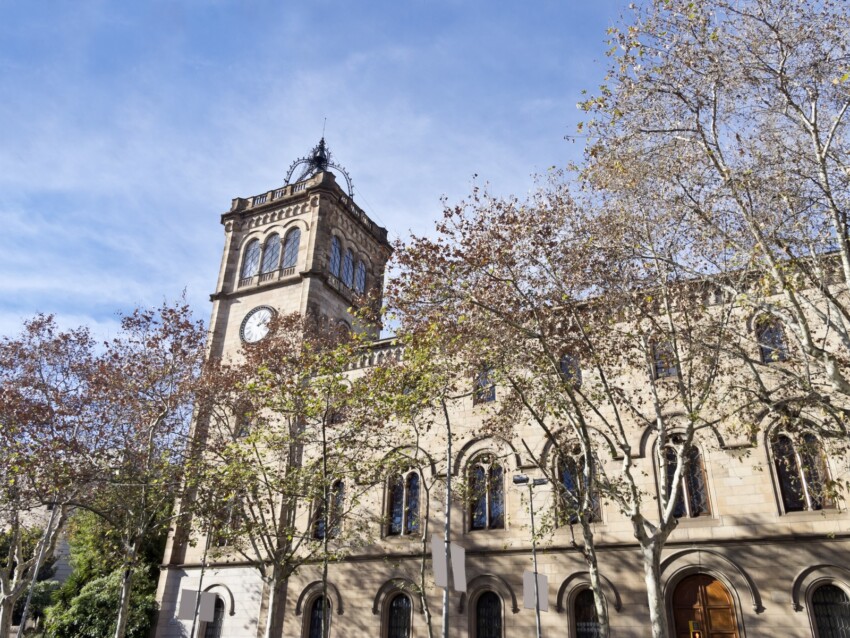
If today there are six universities in Barcelona in all, until 1958, the Universitat de Barcelona was the only one, housed in a charming 19th-century building occupying two blocks of Eixample.
The interior gardens, with fountains and patios, are a cool refuge on hot summer days.
Palau Macaya
15Pg. de St. Joan, 108, L'Eixample, 08037 Barcelona, Spain
Designed by Puig i Cadafalch in 1901, the Palau Macaya is located on Passeig de Sant Joan at number 108 and is a fine example of the neo-Gothic style of modernist architecture. The white façade is enlivened by decorations and two columns. Noteworthy are the modernist style sculptures by Eusebi Arnau. The building is owned by the Barcelona bank La Caixa, and is home to the Centre Cultural de la Caixa, which holds temporary exhibitions.
The Rambla de Catalunya starts at Placa Catalunya and cuts through the Eixample from south to north (or rather, from south-east to north-west as the houses in the district are ‘inclined’ by 45 degrees) until it intersects with the Avinguda Diagonal. It is like an extension of the better known Rambla, but at the same time a more sober, luxurious and much less touristy version of it, where one can escape to the more boisterous Rambla.
Chic shops of all kinds and cafés populate the street along its entire length from Plaça de Catalunya to Diagonal, attracting many wealthy customers.
At the western end of the Eixample, a few steps from Placa d’Espanya, is Parc Joan Miró, a small park that actually adds little to Barcelona in terms of public greenery (it cannot compete with Parc de la Ciutadella or Montjuic), but which is famous for housing Joan Mirò’s beautiful and much-famous sculpture‘Dona i ocell‘, i.e. ‘the woman and the bird’, a 22-metre-high concrete statue covered in mosaics and tiles, created in 1983 by the Spanish artist to welcome visitors to Barcelona.
Fun fact: in Catalan, the word ‘ocell’ translates as ‘bird’, and it too has the same sexual meaning we give it in Italian. And for some, this is precisely the reason why Miró came up with this narrow, elongated statue!
Map
In the following map you can see the location of the main places of interest mentioned in this article.
Where to stay in the Eixample
TheEixample is a district that occupies an area of approximately 15 square kilometres. In other words, it is practically the size of a small provincial Italian town, so it is natural to think that there are plenty of places to sleep. And this is indeed the case, as here you can find luxury hotels, small flats, boutique hotels, budget hotels, bed and breakfasts, you name it. The very high tourist vocation of the district means that practically everywhere there is an establishment where you can stay.
Which one to choose? Of course, it depends first of all on your budget and then on your needs. If you are travelling with a rental car, you might consider looking for accommodation near an area where it is easy to find parking, or even with private parking. If you are travelling on foot, choose accommodation that is close to the metro. If arriving from the airport, we recommend accommodation near Placa d’Espanya and Parc Joan Miró, as the Aerobus, the bus that connects Barcelona Airport with the city, makes an intermediate stop here.
We offer best rates If you find it cheaper we refund the price difference.
Free cancellation Most properties allow cancellation without penalty.
We're available 24 hours a day For any problem call Booking.com.
TheEixample is the district of Barcelona located north of the historical centre and Placa Catalunya, and stretches in all directions for several kilometres.
How to save on transport and entrance fees
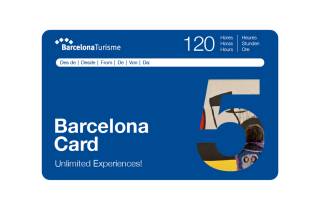
City Card allow you to save on public transport and / or on the entrances to the main tourist attractions.



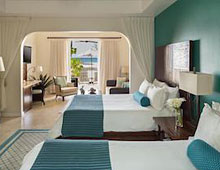 Hotel
Hotel 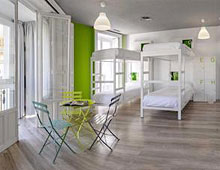 Budget accommodations
  Apartments
  Family Hotel
  Luxury Hotel
  Resorts