
Bestseller
Barcelona: Montjuïc Cable Car Roundtrip Ticket
From 19,00 €
Buy the ticket
Montjuic Castle is an old military fortress dating back to 1640, which dominates Barcelona from the top of Montjuic Hill. Today it is owned by the municipality, which uses it for events and shows.
Construction work on the Montjuic castle began in 1640, and as early as 1641 the fort was the scene of a battle during the Catalan revolt against Spanish authority put down by the commander of King Pedro Fajardo‘s army, leading an army of 26,000 men that recaptured several towns throughout Catalonia, but failed to pass Montjuic thanks to the strenuous defence of the rebels led by Francesc de Tamarit.
In 1694, 50 years later, new ramparts were erected and the fortress became a castle, but it was demolished in 1751 by Spanish architect and engineer Juan Martin Cermeno, who created the structure we can still admire today. Between 1779 and 1799, the defence systems were improved and 120 new cannons were introduced, giving Montjuic Castle its final appearance.
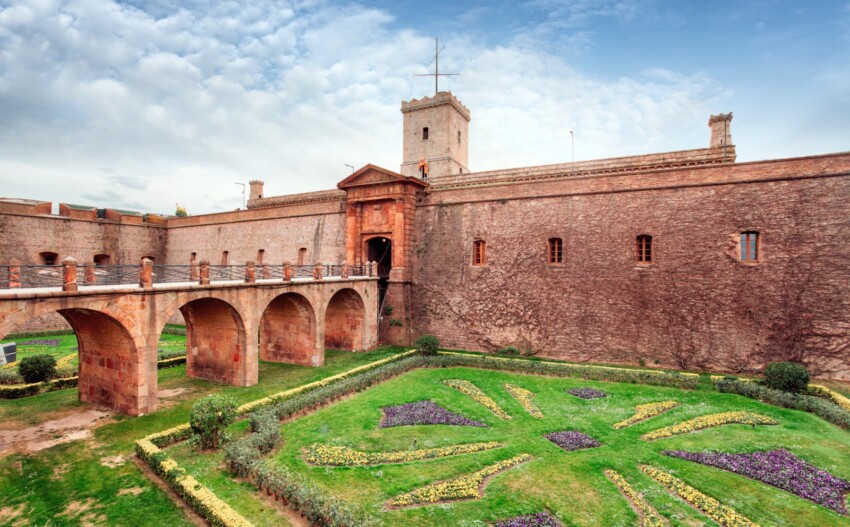
Over the last 350 years, Montjuic Castle has played a decisive role in the history of Barcelona, becoming a symbol of submission after the Catalan defeat against the Spanish in 1714. From then on, the cannons of Montjuic bombarded the city and its citizens on several occasions; the castle also served as a prison and torture centre, continuously for three centuries.
The castle has had a negative reputation in Catalan history books due to its role in the civil war from 1936 to 1939, when both sides of the conflict imprisoned, tortured and murdered political prisoners here, such as Lluis Companys, president of the Generalitat de Catalunya during the Spanish Civil War, who was executed after an order from Franco’s regime in 1940. A total of more than 4000 people were executed here during the repression.
In April 2007, the government transferred the ownership of Montjuic Castle to the municipality of Barcelona. Following a discussion that lasted several months, the castle became a municipal property. As a result, the military weapons museum inaugurated in 1963 by Franco was closed in 2010, and the city council launched a project to restore and secure the roof and watchtowers.
Current plans for the castle include L’Espai de la Memoria, El Centre de Interpretaciò de la Muntanya de Montjuic and various cultural activities.
In 2015, the municipality of Barcelona banned the annual celebration of mass inside the castle of Montjuic to commemorate the fallen of the Spanish Civil War, which had been held continuously since 1940, considering it glorification of the military coup.
Montjuic Castle can be reached by using the Montjuic cable car, the upstream station of which is located next to the castle entrance, and which connects to the Parallel station of the metro, via the Montjuic funicular.
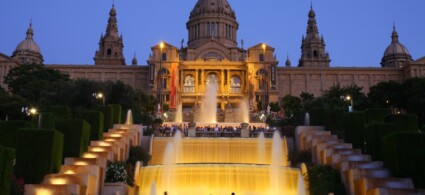
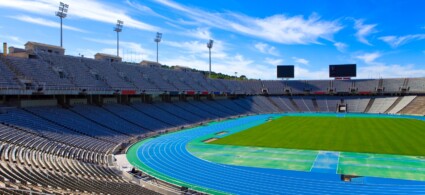
The castle of Montjuic occupies part of the hill of the same name, stretching from the sea to the hinterland, in a very interesting area for tourists as it is home to some of the city's most famous attractions, such as the Font Magica and the Olympic Stadium.
City Card allow you to save on public transport and / or on the entrances to the main tourist attractions.


 Hotel
Hotel  Budget accommodations
  Apartments
  Family Hotel
  Luxury Hotel
  Resorts