Bestseller
Barcelona: La Pedrera-Casa Milà Ticket & Audio Guide Option
From 29,00 €
Buy the ticket
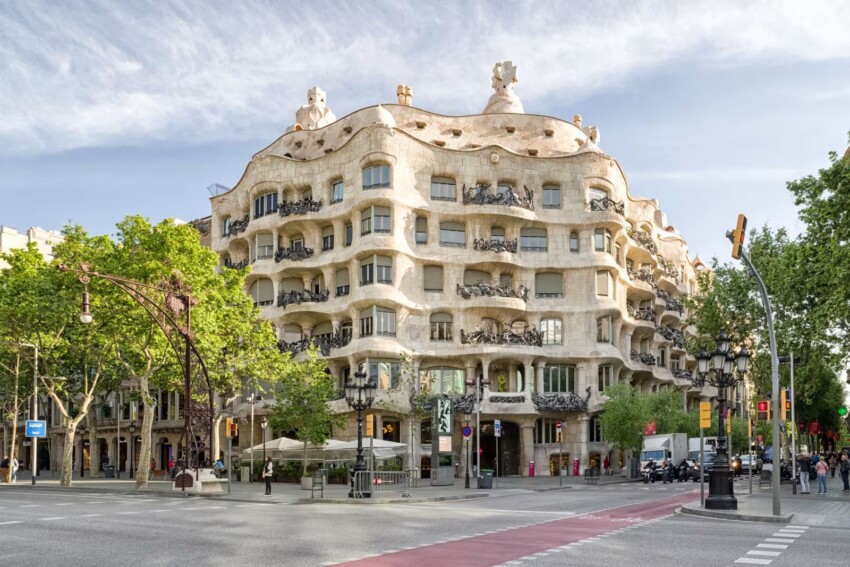
The Casa Milà, colloquially known as La Pedrera, is one of Barcelona’s most famous modernist buildings and is Antoni Gaudí‘s last civil work before the Catalan architect devoted himself body and soul to the Sagrada Familia.
The building was commissioned by businessman Pere Milà i Camps and his wife Roser Segimon i Artells. At the time, its appearance was highly controversial due to its undulating façade built of stone, wrought-iron balconies and innovative windows.
In 1984 the Pedrera, together with the other buildings constructed by Gaudi in Barcelona, was declared a UNESCO World Heritage Site. Today it is the headquarters of the Catalunya-La Pedrera foundation, which runs exhibitions, activities and tourist visits to the Casa Milà.
La Pedrera is located along Passeig de Gracia, and can be easily reached by bus or metro (lines 3 and 5, Diagonal stop) or even on foot from Plaza Catalunya, from which it is about one kilometre away.
La Pedrera is ahuge 9-storey house with over 1300 square metres per floor. Gaudí began designing it in his studio inside the Sagrada Familia, where he conceived this house as a single, constant curve, both inside and out, incorporating numerous geometric solutions and naturalistic elements.
The Casa Milà is the result of two buildings, structured around two courtyards that provide light to its 9 floors. The ground floor was originally intended to be the garage, while the main floor was to be the private residence of the Milà family and the other spaces were to be used for over 20 houses that the owners would rent out.
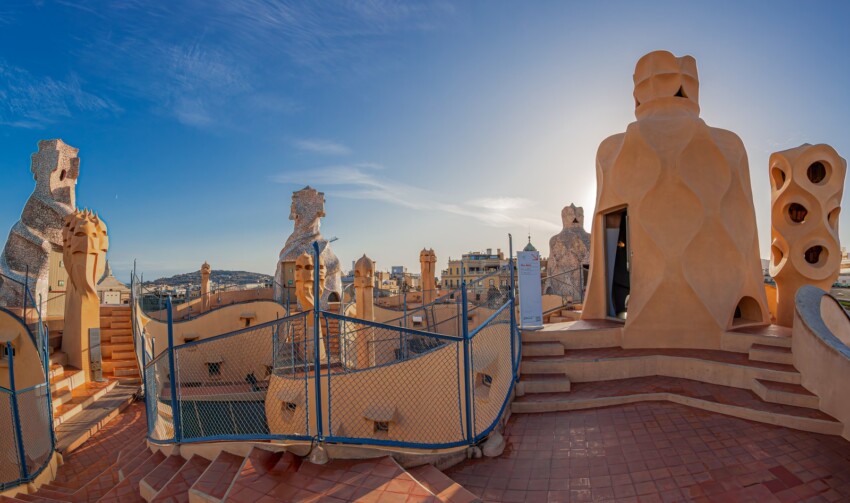
One of the most significant parts of the Pedrera is its roof, crowned by stairways, fans and chimneys. All these elements, made of various materials, have a specific architectural function, and at the same time have become true sculptures perfectly integrated into the building.
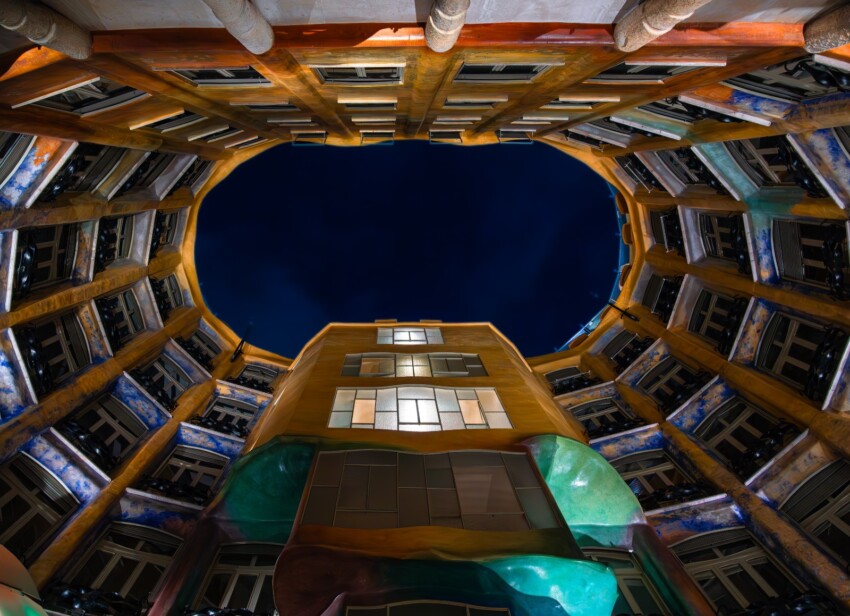
La Pedrera is a unique entity, in which the form of the exterior continues inside. The ceilings, for example, have great dynamism, as do the hand-carved wooden doors, ornate windows and furniture and so on.
Gaudí, as he did for the Casa Batllò, designed the furniture specifically for the main floor, as part of a concept of integral modernism in which the architect takes responsibility for everything, from the structure to the façade, including every detail such as the lighting, furniture, ceilings and accessories such as lamps or candelabra.
In spite of everything, Gaudí had some disagreements with Mrs Milà, who complained that her house had no straight walls and that she had no say in the matter. For this reason, when Gaudi died, some furniture was removed and the original appearance of the house was slightly altered.
You can visit the famous Casa Milà in different ways: buy a skip-the-line ticket, for a day or night visit, or a combined ticket with a visit to other Gaudí works – choose the one that suits you best! We recommend that you visit at off-peak times, i.e. early in the morning or late in the afternoon.
Due to the large number of tourists who visit Casa Milà every day, we recommend that you book your tickets in advance directly online, by clicking on the box below: this way you will avoid queues at the ticket office before entering.
An original alternative is to visit Casa Milà in the evening: in addition to the classic tour, you can enjoy a unique audiovisual show on the panoramic terrace. Recommended!
If in addition to Casa Milà you also want to visit Gaudi’s other works such as Casa Batlló or Casa Vicens, or other attractions in the city, choose a combination ticket: you could save money compared to buying individual tickets for each attraction.
Finally, if you intend to buy a city card such as the Barcelona Card or Barcelona Card Express, you will get a discount on the entrance ticket to Casa Milà, in addition to all the benefits of the cards, such as unlimited transport and free or discounted entry to over 100 attractions and activities in Barcelona.
Casa Milà is located at the northern end of the elegant Passeig de Gracia, a stone's throw from the Diagonal metro stop in the Eixample district.
City Card allow you to save on public transport and / or on the entrances to the main tourist attractions.



 Hotel
Hotel  Budget accommodations
  Apartments
  Family Hotel
  Luxury Hotel
  Resorts