Bestseller
Barcelona Gothic Quarter Free Night Tour
Buy the ticket
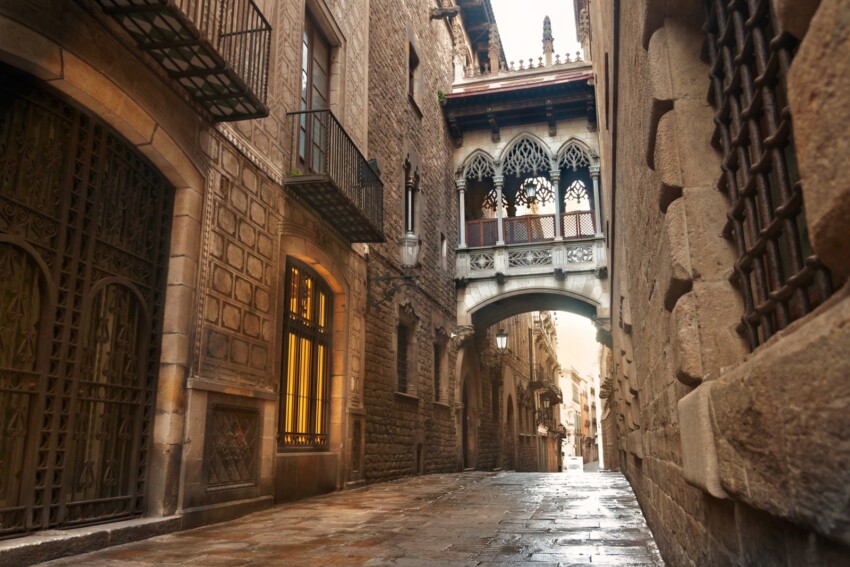
The Barrio Gotico – Barri Gotic in Catalan – is the Gothic quarter of Barcelona, so called because of the many splendid Gothic monuments within it. However, traces of the old Roman village (called Barcino) surrounded by stone walls are still visible.
Rich in the past, the district is the only area of the city completely preserved as it was in the Middle Ages, with buildings, squares and alleyways that are well worth a walk to fully appreciate its splendour.
Very central, it is the area between Las Ramblas and Via Laietana, up to Plaça de Catalunya.
The Barrio Gotico is undoubtedly the main place to see as far as tourist Barcelona is concerned. It is in this area that many of the city’s attractions, museums and monuments are concentrated, starting with the beautiful Gothic Cathedral, which occupies an entire block. The Barrio Gotico can easily be visited on foot, in fact it would be difficult the other way around as cars are forbidden in these narrow streets. Strolling aimlessly through the streets of the quarter, between a craft shop and a traditional shop, you will discover unexpected squares, some very touristy like the famous Placa Reial, others less so, such as Placa del Pi or Placa de Sant Jaume.
In any case, spend the time it deserves, especially if it is your first time in Barcelona. And of course, stroll along its western ‘border’, represented by the Rambla.
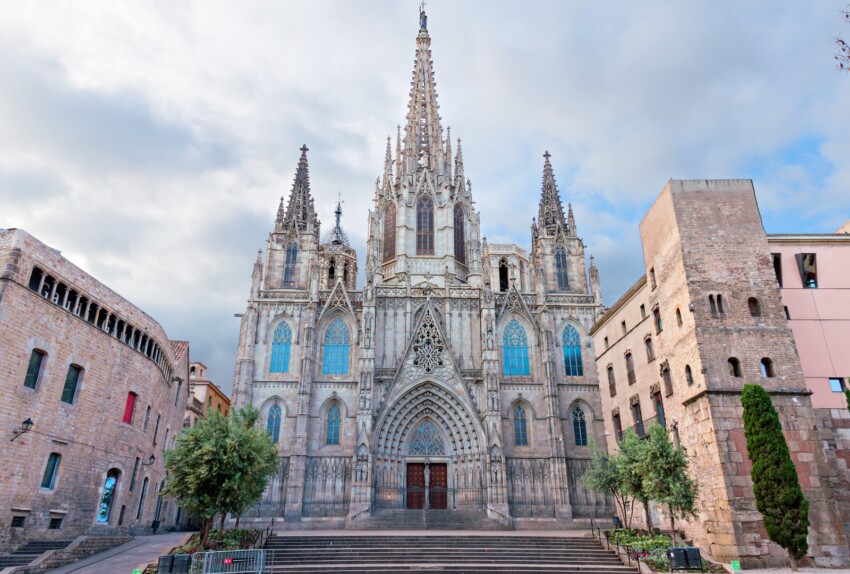
Barcelona Cathedral is dedicated to Santa Eulalia, the patron saint of the city. Also known simply as ‘la Seu’, meaning ‘the seat’, in the sense that it is the seat of the diocese. It is a huge building, about 100 metres long and just under 50 metres wide. Its magnificent Gothic façade is its perfect calling card, with the central spire reaching a height of no less than 70 metres.
Inside, the cathedral has a single nave, where it is worth stopping to admire the large 15th-century stained glass windows, as well as the 28 side chapels and the crypt under the choir, with the sarcophagus of Santa Eulalia.
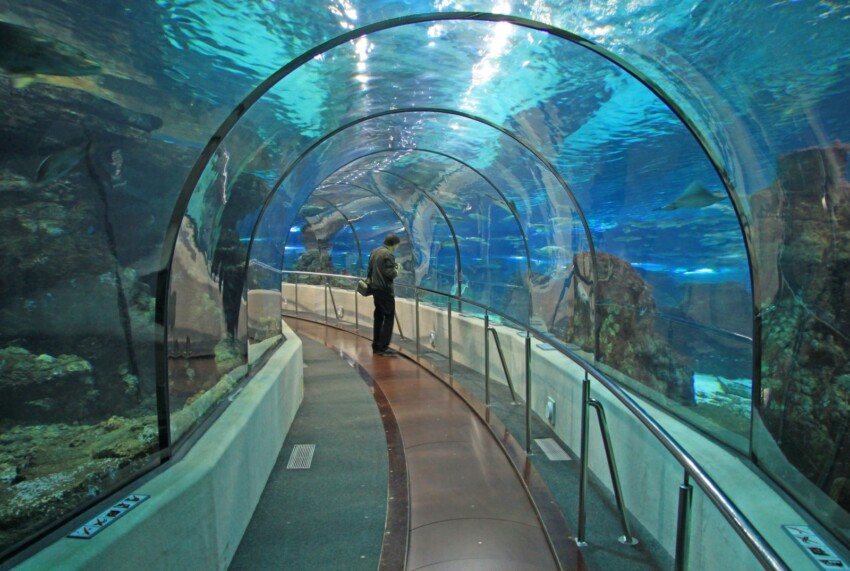
The Barcelona Aquarium is located at the end of Rambla de Mar, next to the Maremagnum shopping centre. It overlooks the Port Vell, on an area reclaimed from the sea built in the last century, and for this reason technically outside the Barrio Gotico. However, even from the heart of the neighbourhood it won’t take you more than a 10-minute walk to get there.
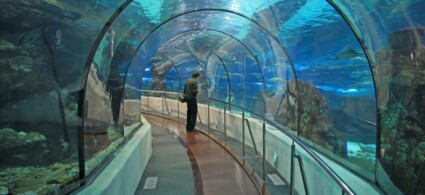
Once inside, you will be astounded by the variety and quantity of fish you can see, over 11 thousand, placed inside 35 tanks containing a total of 5 million litres of water. The jewel in the crown of the Barcelona Aquarium is its underwater tunnel, a good 80 metres long and walkable, which runs through a huge tank, the largest in the aquarium, where you can admire sharks, rays and other ocean creatures.

One of the most popular attractions for tourists visiting Barcelona is undoubtedly the Wax Museum. This particular type of museum is now famous all over the world, and can also be found in other European metropolises; the one in Barcelona actually adds little to what you might expect, however it is interesting to visit especially because apart from the ‘classic’ Hollywood and sports celebrities, it portrays personalities from Spanish and – above all – Catalan history and culture, as well as players from the city’s football teams past and present. A great alternative on a rainy day, Barcelona’s wax museum is located at the south end of La Rambla, a stone’s throw from the Columbus Monument.
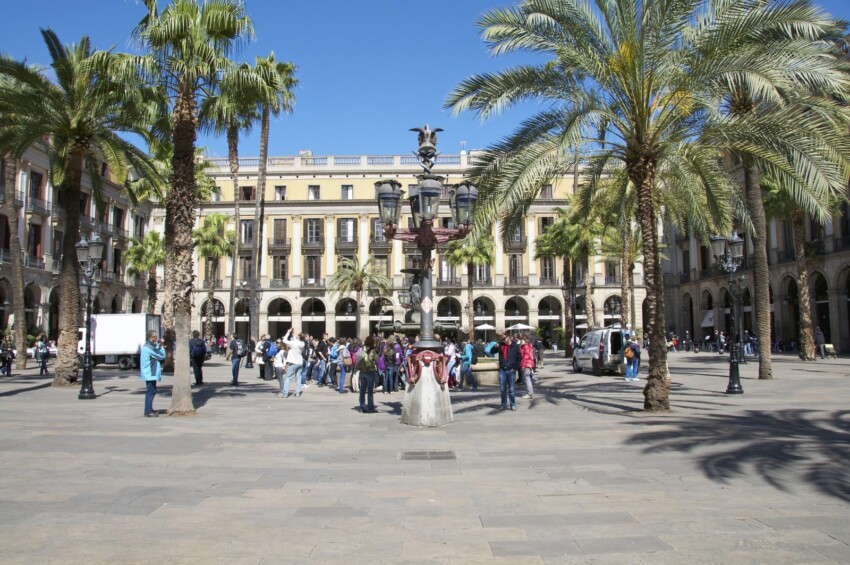
Shaded by tall palm trees and surrounded by stark 19th-century buildings, Plaça Reial is one of Barcelona’s most emblematic squares and a great starting point for a night out. It is a square with a typical Spanish square shape, with arched arcades under which there are mostly restaurants and tapas bars, very touristy but certainly less so than those on the nearby Ramblas. During the good season (and thus practically all year round!) they put their tables outside, which from under the arcades ‘trespass’ into the middle of the square, creating a jovial and warm atmosphere.
In the centre of the square, always crowded with tourists during the day and also with locals in the evening, there is a fountain with the Three Graces, while the lampposts were designed by a very young Gaudi at the end of the 19th century.
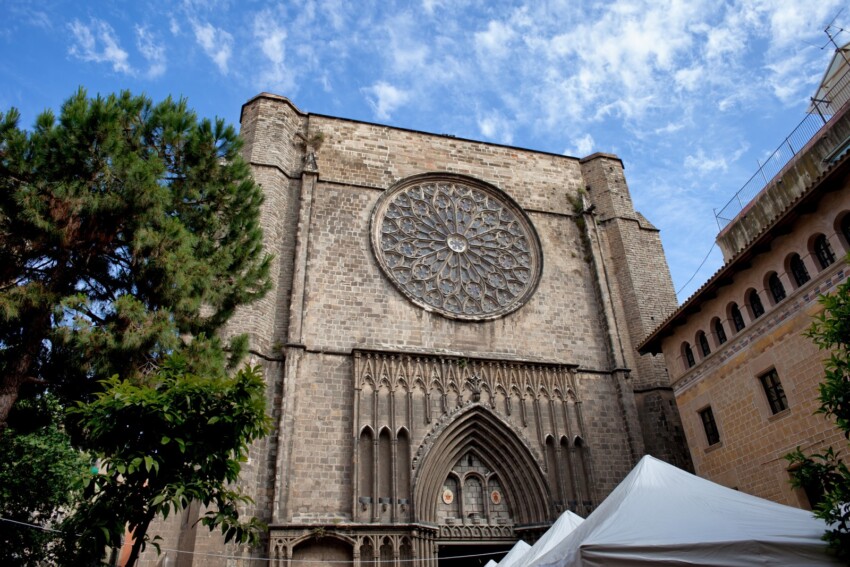
The Basilica of Santa Maria del Pi (‘pi’ means ‘pine’ in Catalan) is a church in Barcelona built in Catalan-Gothic style, declared an Asset of Cultural Interest in 1931. It stands at the intersection of Calle Cardenal Casanas and Plaza del Pi, in the heart of the Gothic Quarter. According to tradition, the name Santa María del Pi by which the church is popularly known derives from the finding of the image of the Virgin in the heart of a pine tree trunk, which is why one of these trees was planted right in front of the church door.
According to others, the pine tree in front of the Basilica of St Mary of Pi was planted to symbolise the purity of the Virgin, always constant as the green of the pine tree, or as an example of human understanding that one should always look to the sky. The church also has another name, Santa María de los Reyes (Saint Mary of the Kings), as a reminder that its altar depicts the Adoration of the Magi. There is also a painting on this theme inside the church.
Since 2011, the treasury of the basilica has been open to the public. It contains important examples of jewellery, such as the Lignum Crucis from 1498 and a magnificent enamelled chalice traditionally called Caliz Bueno (‘good chalice’) donated to the basilica by the illustrious Dr. Felip Malla in 1431.
In addition, the treasury houses the paintings ‘Adoration of the Magi’ by Juan Carreno de Miranda and ‘La Sagrada Familia’ by Antonio Viladomat. The treasury is completed by a permanent exhibition on the history and characteristics of the Basilica of Santa Maria del Pi, with scenes of daily life and the personalities who have participated in its construction and maintenance throughout history.
The Basilica of Santa Maria del Pi has one large nave, 54 metres long, 15.50 metres wide and 27 metres high. It has polygonal apsidal and side chapels located between Gothic buttresses.
The main façade has a large 12-armed rose window dating back to the 14th century, which was destroyed by fire in 1936 and rebuilt between 1939 and 1943 by architect Josep Maria Jujol, based on the original photographs and a study of the monasteries of Pedralbes and Sant Cugat
The façade is dominated by two octagonal towers, one on each side. The huge bell on the south side of the head is also octagonal, is 54 metres high and the walls at the base are 3.55 metres thick.
On the opposite side is the side façade and apse, with a continuous wall with windows between the buttresses, and an octagonal tower containing a spiral staircase that provides access to the bridge.
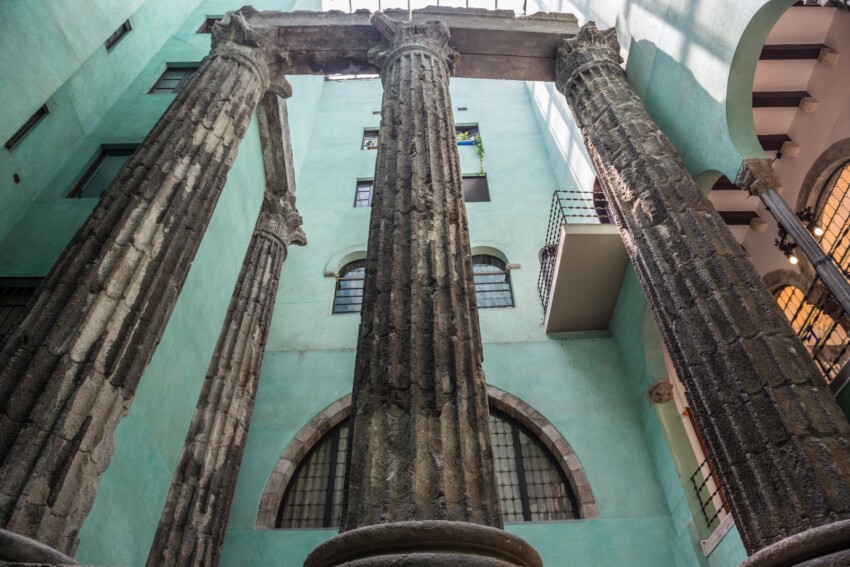
The Museu d’Història de Barcelona, or MUHBA, is a Barcelona museum that preserves, researches, communicates and exhibits the historical heritage of the city, from its origins in Roman times to the present day; it is financed by the Barcelona City Council.
The museum is located in Plaza del Rey, in the heart of the Gothic Quarter. The MUHBA is responsible for a number of historical sites around the city, most of them archaeological sites showing remains of the ancient Roman city, called Barcino in Latin. Some others date back to the Middle Ages, including the Jewish quarter and the medieval royal palace called Palau Reial Major. The rest are contemporary buildings, including old industrial buildings and sites related to Antoni Gaudí and the Spanish Civil War. The MUHBA was inaugurated on 14 April 1943, and the main initiator and first director was the historian Agustin Duran Sanpere.
The Museu d’Història de Barcelona has numerous sites scattered throughout the city. The most important is the MUHBA Plaza del Rey, the museum’s headquarters and one of the best examples of a Catalan Gothic courtyard in a private house. It was built in the 15th and 16th centuries and rebuilt in 1931, and it is possible to visit the remains of an entire quarter of the Roman city of Barcino underground. The archaeological area under Plaza del Rey covers more than 4,000 square metres, and it is possible to see exhibitions on daily life in Roman houses, and to take a walk through what was the old city.
Other MUHBA sites scattered around the city include the MUHBA Temple of Augustus located in the Gothic quarter, the MUHBA Domus of Saint Honorat, the MUHBA Santa Caterina Market and numerous testimonies to the city’s recent past, such as the MUHBA of Fabra i Coats, one of the most important textile companies in all of Spain, of which the large 19th-century buildings have been largely preserved and are located in the Sant Andreu quarter.
Also interesting is the MUHBA Refugi 307, an anti-aircraft shelter located in El Poble-sec, in the Sants-Montjuïc district. It is one of the best preserved anti-aircraft shelters built during the Spanish Civil War to protect the population against the bombing of Barcelona in 1937 and 1938, consisting of over 200 metres of tunnels.
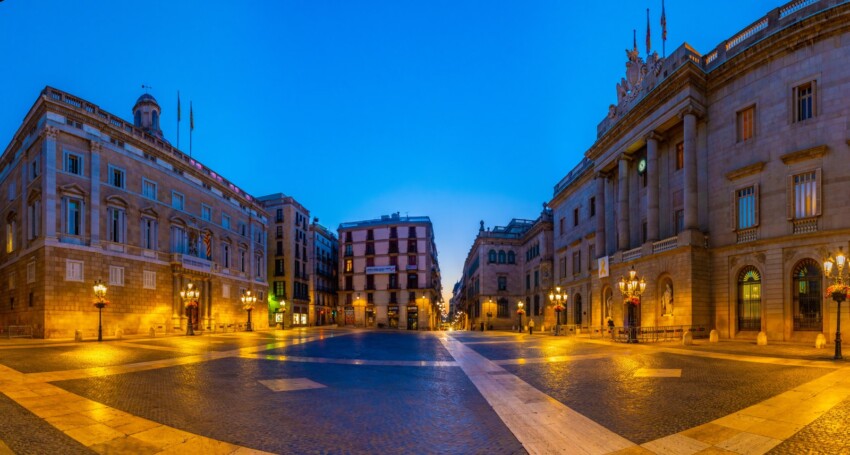
A symbol of power and history having once been the centre of ancient Roman Barcelona (Barcino), Plaça de Sant Jaume is today the administrative centre of modern Barcelona. It is overlooked by the imposing Palau de la Generalitat (seat of the Catalan government) and the 15th-century Ajuntament (town hall), or Casa de la Ciutat.
Despite the presence of these two important buildings, Placa de Sant Jaume is not one of the most beautiful in Barcelona, let alone one of the most famous. However, it is very popular with tourists, who often don’t even know its name, as it is located practically halfway between Las Ramblas and the Cathedral, in the heart of the Gothic Quarter: impossible not to walk there!
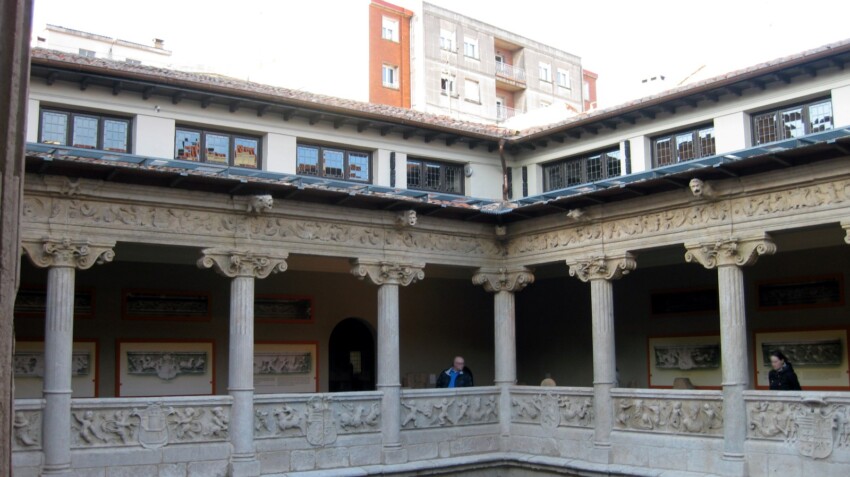
The Diocesan Museum of Barcelona, Museu Diocesà in Catalan, is located in Barcelona’s Cathedral square, in the Pia Almoina building, and showcases interesting collections of Romanesque, Gothic, Renaissance and Baroque works, owned by the Church.
The first records of the building date back to 935, when it was built as a residence for the community of the Canons Regular of St. Augustine. Demolished in 1400, it was restored a few years later in the same place as a charitable institution. The current structure consists of two bodies: the Gothic one, created in 1435, and the Renaissance one, from 1546.
The Museu Diocesà of Barcelona was created from a collection of multiple works of art belonging to different parishes in the diocese, and offers an interesting example of Romanesque, Gothic, Renaissance and Baroque art. The Polinya murals painted in the 12th century, the sculpture of the Virgin of Santa Maria de Toudell, the Riells del Fai Romanesque silver cross, and the Sant Joan Baptista altarpiece are just a small sample of what the museum offers visitors.
As can be easily guessed, the museum contains an extensive collection of artworks from churches in the diocese of Barcelona from its beginnings to the present day.
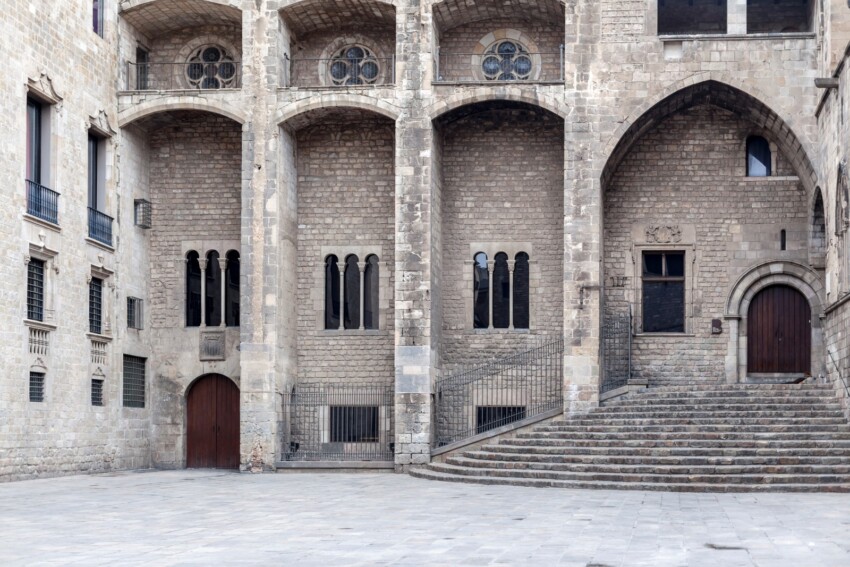
Right in the centre of the Barrio Gotico is the best-preserved medieval square, Plaça del Rei, which is home to several imposing buildings, most notably the 14th-century Palau Reial.
Inside is the Saló del Tinell, where Ferdinand and Isabella are said to have welcomed Christopher Columbus on his return from America.
A few metres from the Plaça del Rei you can admire the Plaça de Ramon Berenguer el Gran, where one of the largest sections of Roman wall in the whole of Barcelona is still intact.
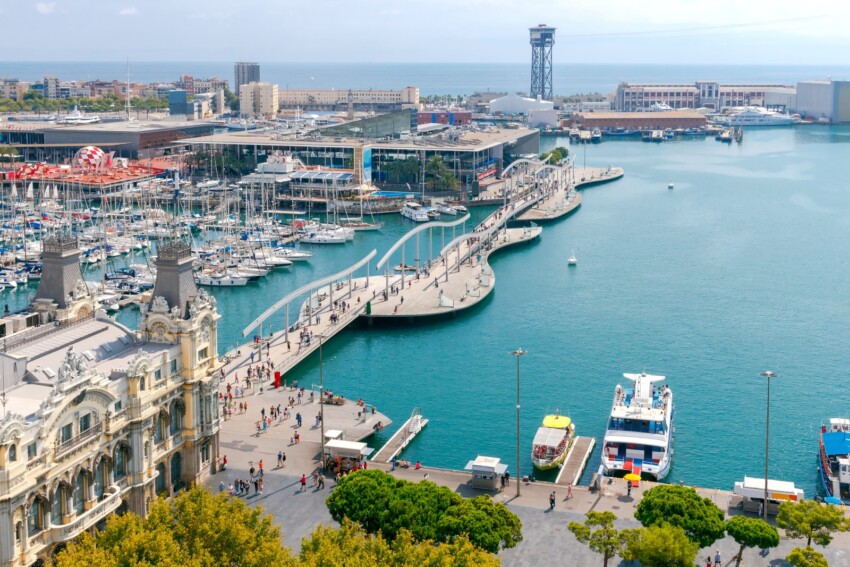
The Port Vell area is one of the most popular with tourists visiting Barcelona. It is located at the end of La Rambla, just after the Columbus monument, and its moored sailboats have become a symbol of the city.
You can admire the harbour by walking along the promenade or crossing it via a pedestrian drawbridge called Rambla de Mar, at the end of which are several attractions including the Maremagnum shopping centre, the Barcelona Aquarium and a modern area with shops, cinemas and restaurants.
Among Port Vell’s most da local attractions are the large meadow named Plaça de l’Ictineo, straddling Port Vell and the adjacent Moll d’Espanya, where the city’s inhabitants like to lie in the sun. and La Gamba, a curious lobster-shaped sculpture located in the pedestrian avenue parallel to the Ronda Litoral, created by Spanish artist Javier Mariscal.

The Pailebot Santa Eulàlia is a refurbished three-masted, originally named Carmen Flores, moored in front of the Moll de la Fusta, in the Port Vell pienz area. Inaugurated in 1918, it transported textiles and salt to Cuba and returned with tobacco, coffee, cereals and timber.
In 1997, the Museu Maritim acquired and refurbished the vessel, according to a plan to create a collection of historical Catalan vessels.
The Museu Frederic Marès is a museum located in the centre of Barcelona, housing numerous works donated to the city by the sculptor Frederic Marès. Now one of the most important sculpture museums in Spain, the building houses one of the most important collections of Spanish sculptures from the 12th to the 19th century.
The museum is located in an old building in the Gothic quarter, just behind the Cathedral. In the museum’s basement, one can mainly admire sculptures from the 3rd and 4th centuries, a collection of crucifixes and statues of the Virgin Mary from the Romantic and Gothic periods, as well as other religious artefacts. The first floor continues the collection of works from the Baroque and Renaissance periods.
Also included in the Museu Frederic Mares is the so-called Museu Sentinel, with objects showing Barcelona’s bourgeois life in the last two centuries, with umbrellas, bottles, glasses and other artefacts and utensils from that period.
The room is divided into several areas: the women’s area with the typical paraphernalia of the 19th-century bourgeois woman, the smoking room with pipes and other accessories for men, and the games room, where numerous toys are displayed.
For a timeless walk in the Barrio Gotico, don’t miss:
In the following map you can see the location of the main places of interest mentioned in this article.
Visiting the Barrio Gotico on a free tour is an excellent opportunity to immerse yourself in the history, art and culture of the Catalan capital without paying anything. At the end of the tour, if you are satisfied, you can decide whether to leave a contribution of your choice.
The Gothic Quarter is one of the most touristy areas of Barcelona, and even here restaurant prices are quite inflated. Unlike on La Rambla, the restaurants in this area often have no outdoor spaces, except for those facing Placa del Pi and in front of the Cathedral, but they are still very touristy and more expensive than average.
However, the rangeof venues is very high, ranging from fast food from large international chains to small tapas bars, from Italian restaurants to ethnic and vegan ones.
If you find yourself around Plaça Catalunya for lunch or dinner, drop by the Hard Rock Café: a must-visit for fans!
The Maremagnum shopping centre is also stormed by tourists, but the restaurants on the ground floor overlooking the Rambla del Mar and the port are really good. As well as providing the opportunity to dine al fresco a stone’s throw from the sea (or to dine, in the warmer months), the products are really fresh, often based on freshly caught fish.
On the opposite side of the Maremagnum, the one overlooking theBarcelona Aquarium, there are some fast food outlets that are excellent for those on a tight budget and short on time, while on the top floor of the shopping centre, a space dedicated exclusively to restaurants was opened in mid-2015.
To fully experience Barcelona’s Gothic Quarter, choose a guided tour, either by bus, on foot or by bicycle.
The Barrio Gotico is the most natural choice for sleeping in Barcelona, especially if this is your first time in the city. Everything is within walking distance here, and metro stops are a stone’s throw away. It goes without saying that there are plenty of places to sleep in the area, but often – due to the shape of the houses – they are small old renovated houses.
Beware of the fact that prices in this area are much higher than the average in Barcelona, but if you sleep here, you may save money on public transport as you will mostly be moving around on foot. In every street of the Gothic Quarter you will practically find a hotel, a B&B or a flat waiting for you: choose the one you prefer, based on your needs and especially your budget.
The Barrio Gotico represents the heart of Barcelona's city centre. It occupies the portion of the city bordered by the Raval district to the south, the Ribera to the northeast, the Port of Barcelona to the east and south, and Placa de Catalunya and theEixample to the northwest.
City Card allow you to save on public transport and / or on the entrances to the main tourist attractions.



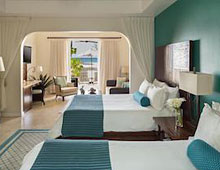 Hotel
Hotel 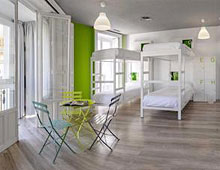 Budget accommodations
 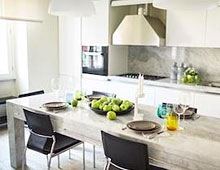 Apartments
 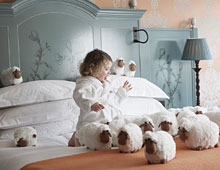 Family Hotel
  Luxury Hotel
  Resorts