Barcelona Card: 25+ Museums and Free Public Transportation
Access over 25 of Barcelona’s best museums and attractions. Save money, be flexible and enjoy free public transportation with a 3, 4, or 5-day card.
From 59,00 €
Barcelona is a symbol of movida, and when it comes to events and parties, the city is always at the forefront. Practically every month of the year you’ll find something to do, whether it’s a religious festival, a secular one or simply an excuse to stay up late at night. From small neighbourhood celebrations to events with international appeal, on this page you will find a month-by-month calendar of the main events and festivals held in Barcelona throughout the year.
Barcelona remembers the Three Kings (los Reyes Magos in Spanish, or Reis Magos in the Catalan diction) with a splendid parade that starts after dinnertime and passes through all the streets of the city centre: it reproduces the Three Kings, who arrive from the sea and are welcomed by the authorities in front of the wide-eyed children, who receive candies and sweets as gifts. With floats, music and parades, you will feel like you are at the carnival in Rio de Janeiro!
The Cabalcata de Reyes Magos is held on 5 January in practically every city in Spain, but the one in Barcelona is truly spectacular. It is also the oldest in the country, as the first edition was held in 1855.
The Barcelona Carnival is not very famous in the world, yet it is one of the biggest, funniest and most crowded events in the city.
With ancient origins, the celebrations last ten days and usually kick off with a ‘tortilla’ competition on Shrove Thursday, where flavour, filling and presentation are judged, and end with the funeral of the Carnival King.
Organised since 1989 by the city’s popular markets, its most spectacular moment is undoubtedly the Rua de Carnaval (carnival parade), which originated on Las Ramblas, but in recent years has spread to the Sants district, L’Hospitalet and Avenida Maria Cristina.
Barcelona’s annual marathon begins and ends on Avenida María Cristina, under the green escarpment of Montjuïc.
First held in 1977, the event has since grown to such an extent that the thousands of participants now form a river that runs through the city, from the northern suburbs of Badalona to L’Hospitalet in the south.
If you are interested in participating in the Barcelona Marathon, be aware that the exact dates vary from year to year, but always during the first half of March; the race starts at 08.30 in the morning and the time limit for the run is 6 hours. It is necessary to register online by visiting the official website, and registration closes one week before the start of the race. The cost to participate depends on the total number of participants; there are 3 brackets (up to 10,000 participants, 10001 to 17,000 participants, over 17,000 participants) of increasing price.
The patron saint of Catalonia Saint George is celebrated in a festival that mixes love, flowers and books. In fact, 23 April is World Book Day, and in Barcelona this celebration is mixed with Catalan traditions, as it is customary for couples in love to exchange gifts: the boy receives a book, and the girl a rose. Actually, in recent years, gender equality has been taking hold, and it is now normal for both men and women to receive both books and roses.
During the Diada de Sant Jordi, book and flower stalls are set up along the streets of Barcelona. The atmosphere is joyful and full of people. You will also have the chance to come into contact with local booksellers happy to recommend the latest releases, but also with the authors themselves, who often take the opportunity to set up stalls for presentations and signings.
The unmissable streets to experience the Diada de Sant Jordi like a local, fortunately coincide with the most touristy areas. In this case they are La Rambla, Passeig de Gracia, Passeig de Sant Joan and the Rambla de Cataluña. There are also Sardana dancers and the famous Catalan Castells, or human towers, around the city.
The Spanish Grand Prix is a car race on the Formula 1 calendar, first held in 1951. Since 1991 it has been organised by the RACC (Real Automovil Club de Cataluña) and is run on the Circuit de Catalunya, in Montmeló near Barcelona. The race will then move to a new circuit near Madrid from 2026.
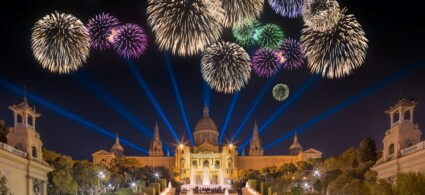
To celebrate Sant Joan and thebeginning of summer, Catalans light bonfires on the beach and watch beautiful fireworks. This is the feast of the Revetlla de Sant Joan, one of the most popular in the region, which in Barcelona is obviously done in grand style. Throughout the city, firewood and old wooden furniture are piled up and set alight, while music resounds in every street and locals descend on the squares and beaches.
An essential element of the Sant Joan festival is the coca bread, a kind of sweet flatbread (which, very distantly, resembles a flattened panettone) that is covered with candied fruit and pine nuts. And although 23 June is the shortest night of the year or so, for many in Barcelona it never seems to end!
The castells are one of the most spectacular traditions held at Plaça Sant Jaume in June. The highly trained castellers climb on each other’s shoulders to create human towers, the tallest of which wins.
The most exciting moment is when a young boy climbs the tower to make the sign of the cross.
Symbolised by a faun with long ears, the Festival del Grec in Barcelona is the most important cultural event of the season: it is an internationally renowned festival featuring musical, theatrical, circus and dance performances. It takes its name from the Teatre Grec, an open-air amphitheatre built in the style of the Ancient Greeks in 1929 on the hill of Montjuic, on the occasion of the Expo held in Barcelona that year.
The first edition of the Grèc festival was held in 1976, and today it is so successful that it takes place in numerous locations scattered more or less everywhere in the city. The main purpose of the festival is to stage the best works of Catalan artists and companies, as well as to present major Spanish and international productions.
During the summer, each district of the city organises its own ‘Festa Major’, but the one in Gràcia is the most important and longest-lasting: concerts, parades, fireworks and rivers of beer keep the entertainment level high.
Neighbourhood residents decorate the streets and the best work is rewarded.
The noisy week of celebrations in honour of Barcelona’s patron saint, the Virgin of Mercy, is the city’s most important festivity, the last blast before autumn.
Hundreds of activities are concentrated in the city over the course of a week, including: artists performing in front of people’s eyes; human towers (castells), capgrossos (dwarves with enormous papier-mâché heads), giants; acrobatic displays with aeroplanes, hot-air balloons and parachutes; all kinds of pyrotechnics, from Bengal flares to fireworks, from pyrotechnic music to correfoc (literally: the fire race, attended by fire-breathing dragons from all over Catalonia).
Preceded by a series of events held in spring, including the Barcelona International Jazz Day, the Festival Internacional del Jazz is the reference point for lovers of this musical genre. In fact, it offers a packed agenda spanning some two months, from October to December, in which live and experimental jazz music is played in various locations around the city, both by emerging artists and by the big names in the genre.
Concerts are held at the Palau de la Música Catalana, Sala Apolo, Auditori and Luz de Gas. Usually, although it is not a rule, the last event of the Festival Internacional del Jazz takes place around mid-December, and is dedicated to Christmas.
The Christmas season starts on 1 December with craft fairs and Christmas markets scattered around the city, particularly around the Cathedral and the Sagrada Família. Decorations and nativity figurines are on sale. The Christmas festivities in Barcelona and throughout the rest of Spain are very popular. The city is lit up with many wonderful Christmas decorations and lights, with many decorations and a Christmas atmosphere permeating the whole city.
Finally, here is the list of public holidays in Barcelona
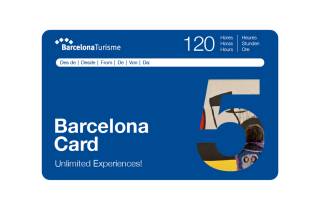
City Card allow you to save on public transport and / or on the entrances to the main tourist attractions.

 Hotel
Hotel  Budget accommodations
  Apartments
  Family Hotel
  Luxury Hotel
  Resorts