Barcelona: Sagrada Familia Entry Ticket with Audio Guide
119.331 reviews
Buy now
From 33,80€ per person

Barcelona cannot be defined because it is a free and creative city that does not like labels. On the other hand, it loves life: it is sunny, imaginative, proud of its traditions but always keeping up with the times, very often anticipating new trends. And how can you not love life when you have an enviable location between the sea and the hills and a mild climate with many days of sunshine a year?
A holiday in Barcelona is an antidote to sadness, a true feast for the senses. Immerse yourself in the colours and shapes of Gaudi’s houses and the taste of typical Catalan cuisine, let the sea breeze caress your face while sipping a mojito on the beach, listen carefully to the sounds of the city to penetrate its secrets.
Perfect for a weekend, a week or a lifetime, it is a city capable of enthusing in equal measure young people on their first solo holiday in search of unbridled fun, couples on a romantic getaway, art and architecture enthusiasts, professionals on the hunt for opportunities and trends, lonely souls. Because Barcelona is everything and its opposite: modern and traditionalist, romantic and transgressive, joyful and melancholic. In a word: unforgettable.

Barcelona is an exciting city, full of things to see and do. Deciding what to visit, especially if you are short on time, can be difficult but don’t worry if there is an attraction you didn’t manage to fit into your schedule: it’s a good excuse to come back!
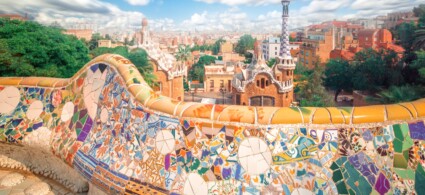
However, there are some attractions that really are a shame to miss: to avoid going home with regret, don’t miss Guadì’s works such as the Sagrada Familia, his artistic masterpiece, the Park Guell, a city park in typical Barcelona style, Casa Batllò and Casa Milà, famous modernist buildings.
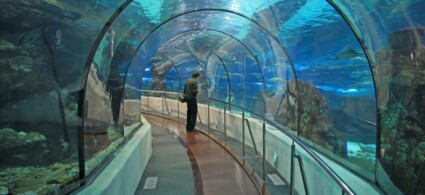
If you’re a football fan, then pay a visit to Camp Nou, the legendary Barcelona FC stadium, the largest in Europe and one of the largest in the world and, if you’re travelling with children, visit the famous Barcelona Aquarium in the Port Vell area.
Due to the amount of tourists who visit these attractions on a daily basis, we recommend that you book tickets to the main attractions online well in advance.
Barcelona is divided into numerous neighbourhoods, all worth a visit. If it’s your first time in the city, of course, don’t miss the central and neighbouring ones, but if you’re a regular, move to the suburbs and you’re sure to be in for a treat.
The must-see neighbourhood for any self-respecting visit to Barcelona is the Barrio Gotico, or Gothic Quarter. It is here that you will find many must-see sights for first-time visitors, including Las Ramblas, the Cathedral and the elegant Placa Reial. The district is largely pedestrianised, and wandering randomly through its narrow streets it is not uncommon to come across small squares that open up almost suddenly, as if to reveal a hidden treasure.
Seen from above, it is reminiscent of any American city: the Eixample is a vast district located north of the historical centre, where the streets intersect at 90 degrees, forming perfectly square blocks. In this area you can walk for kilometres without finding anything interesting, but if you know where to go you will discover one of the most interesting neighbourhoods in Barcelona.
Among the many things to see are the Casa Milà and Casa Batllò, two splendid works of Gaudí located just a few metres from each other, but above all the Sagrada Familia, the eternally unfinished, the absolute symbol of Barcelona. Then don’t miss the Recinte Modernista de Sant Pau, a former hospital now converted into a museum, much of it open-air. For a stroll, the street not to be missed is Passeig de Gracia, one of the city’s main shopping streets.
To the west of the Barrio Gotico, whose common border is formed by the Ramblas, is the district El Raval. This former infamous area has now been brought back to life, and although it still has a questionable name, give it a chance and you won’t regret it. Very close to the centre but at the same time so far away, strolling through the streets of the neighbourhood you can visit the MACBA (Museum of Contemporary Art of Barcelona), but also the beautiful Palau Guell, a UNESCO World Heritage Site.
From the Barrio Gotico move west, crossing the busy Via Laietana. You will find yourself in the Ribera district, also known as El Born after one of the areas into which it is officially divided. Here Barcelona becomes more authentic, the atmosphere is less touristy and locals pop up from every tapas bar.
It is a district well worth a visit, not least because it is home to some interesting city attractions, including the Parc de la Ciutadella, Barcelona’s green lung, which also houses the zoo. Also of interest are the Picasso Museum, the magnificent Palau de la Musica Catalana, the basilica of Santa Maria del Mar and the MOCO Museum, dedicated to modern and contemporary art.
A hundred years ago Gracia was a city in its own right, but with the explosion of Barcelona’s metropolitan area, it has been totally incorporated into the urban fabric of the city. Today Gracia is a chic and exclusive neighbourhood, but also hipster and alternative: a real melting pot of styles! Despite everything, it retains some truly authentic corners where locals like to spend their evenings, far from the hustle and bustle of touristy Barcelona.
If once in the area you want to see something not to be missed, devote yourself to Parc Guell, one of the city’s most beautiful attractions, but also to the neglected (by tourists) Casa Vicens or the typical Mercat de l’Abaceria Central. Then devote yourself to the random exploration of streets and squares: make a note of Placa del Sol, Placa de la Vila, Placa del Diamant and the shopping streets Carrer Gran de Gracia and Carrer d’Asturias.
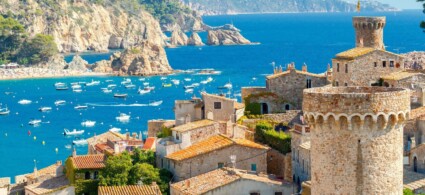
Barcelona is a city by the sea, and if you stop at the main tourist attractions it looks like it could do without. But if you visit Barceloneta, the Mediterranean will once again take centre stage: you will find a district with two faces, one traditional and one super-modern. The first is the district proper, with its narrow alleys and old fishermen’s houses overlooking it, almost reminiscent of a Ligurian village. The second, on the other hand, is the trendy and avant-garde seafront, with its very long beach frequented by tourists and residents every day of the year.
Among Barceloneta’s attractions, apart from the beach, are the MHCAT, the Museum of the History of Catalonia, Frank Gehry’s famous Peix d’Or sculpture and, whether you like it or not, the W-Barcelona, the beloved sail-shaped hotel that has been shaping Barcelona’s shape and skyline for a few years now.


Discover Barcelona through the eyes of expert guides who will take you on a tour of the city's hidden treasures. Participating in a guided visit or a free tour will allow you to capture the true essence of Barcelona.
The free tours are a viable alternative to traditional guided tours. They work like this: participation is free and at the end of the visit you can leave a tip at your discretion. Below you will find our favourite free tour, otherwise you can see the full list by visiting this page.
Getting to Barcelona is very easy because there is a wide choice of low-cost flights departing from different cities. The city airport is El Prat, connected to the city centre by metro and frequent shuttle buses.
Before booking also check flights to Girona (also called Barcelona-Girona): this airport is further away but sometimes cheaper flights can be found. From Girona airport you can reach the centre of Barcelona by direct bus; the journey time is about one hour and 15 minutes.


In a city as big as Barcelona, staying in the city centre is always the favourite choice for tourists and in fact it is the most convenient solution: you can walk to many of the most famous attractions, limiting the time wasted on the metro or bus, there is a wide choice of hotels and flats and in the evening you just have to leave your accommodation to find bars, restaurants and clubs.
The heart of Barcelona includes very characteristic historical districts like the Barrio Gotico and El Raval, certainly the most charming, more modern areas like theEixample and seaside areas like Barceloneta.
Close to the centre are neighbourhoods less known to tourists. Don’t disdain them: the choice of hotels is less, but the prices are cheaper and in addition you can see a more authentic Barcelona, that of the people who live there. One of the most beautiful of these is Gracia.

Public transport in Barcelona is cheap and works very well, so getting around the different parts of the city is easy.
The quickest and easiest to use means of transport is the metro, which with 11 lines covers the whole city area and also goes beyond the urban area. It operates from 5 a.m. until midnight or 2 a.m. depending on the day of the week; on Saturdays it runs 24 hours a day.
Actually, metro and buses are not necessary to visit the centre: it is much better to go on foot, both to save time and money and to admire buildings, shops and oddities that you may encounter along your city routes.
If you like convenience instead of public transport, you can get around with a hop on hop off tourist bus, with stops near the most famous tourist attractions.
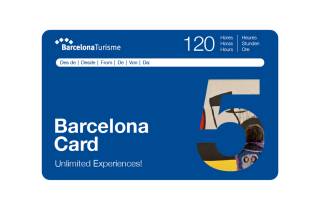
To save money on transport tickets you can buy a city card before you travel to Barcelona: the Hola BCN Card, the Barcelona Card and the Barcelona Card Express offer unlimited travel on the metro, bus and tram for the duration of the card, among other benefits.

Barcelona enjoys a temperate climate, with cold but never harsh winters and warm summers; rain is infrequent and snow is practically non-existent.
Thanks to these very favourable weather conditions you can visit throughout the year but the best times to go to Barcelona are in late spring and early spring, when it is warm enough to go to the beach but without suffering. July and August are very crowded months and should possibly be avoided because they are the most expensive.
Winter is perfect if you are more interested in cultural visits than beaches: you will find fewer crowds in museums (still very busy) and lower prices for flights and hotels.
The city of Barcelona is located along the northeast coast of Spain, in the autonomous community of Catalonia, of which it is the capital. Looking at the map, it seems to be very close to France, but in reality it is almost 200 km from Perpignan, the first major city after the border.
City Card allow you to save on public transport and / or on the entrances to the main tourist attractions.













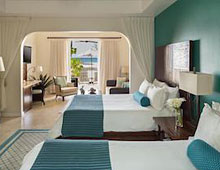 Hotel
Hotel 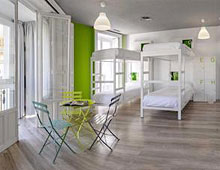 Budget accommodations
 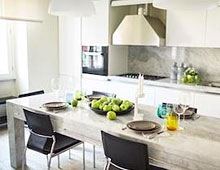 Apartments
  Family Hotel
 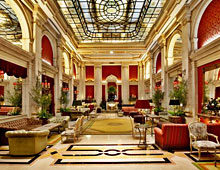 Luxury Hotel
 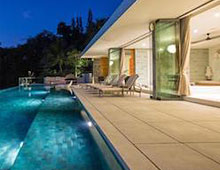 Resorts